

The Calligrapher's Go-Bag
Keep your basic tool kit packed and ready for lettering.

The readiness is all.
Friends of Calligraphy, the Northern California guild promoting lettering arts, is having their annual 5-day Spring Retreat in March. I’m happy to be going this year! We’re a group drawn together by our shared interests in art, lettering, calligraphy, and design, and every spring we have a chance to get together, work on our personal projects in the Scriptorium (quiet at all hours), and enjoy time in the garden and inevitable good food.
Of course I’ll pack my art bag, and I’ll tell you the contents, but first I would like to list what I think are the basic essentials without which one cannot do. It’s good to be prepared for that “found hour” that would otherwise be lost in a whirl of indecision. Need to spend an hour or so on public transit? A long wait for an appointment? Be ready at a moment’s notice to play around with some letterforms to keep your creative thread alive and relevant while waiting for the world to catch up.
In the deep past of the Chinese tradition, the Four Treasures of Study are brush, ink, paper, and inkstone. Not so casual as our “go-bag”, but simply four things needed to literally express everything.
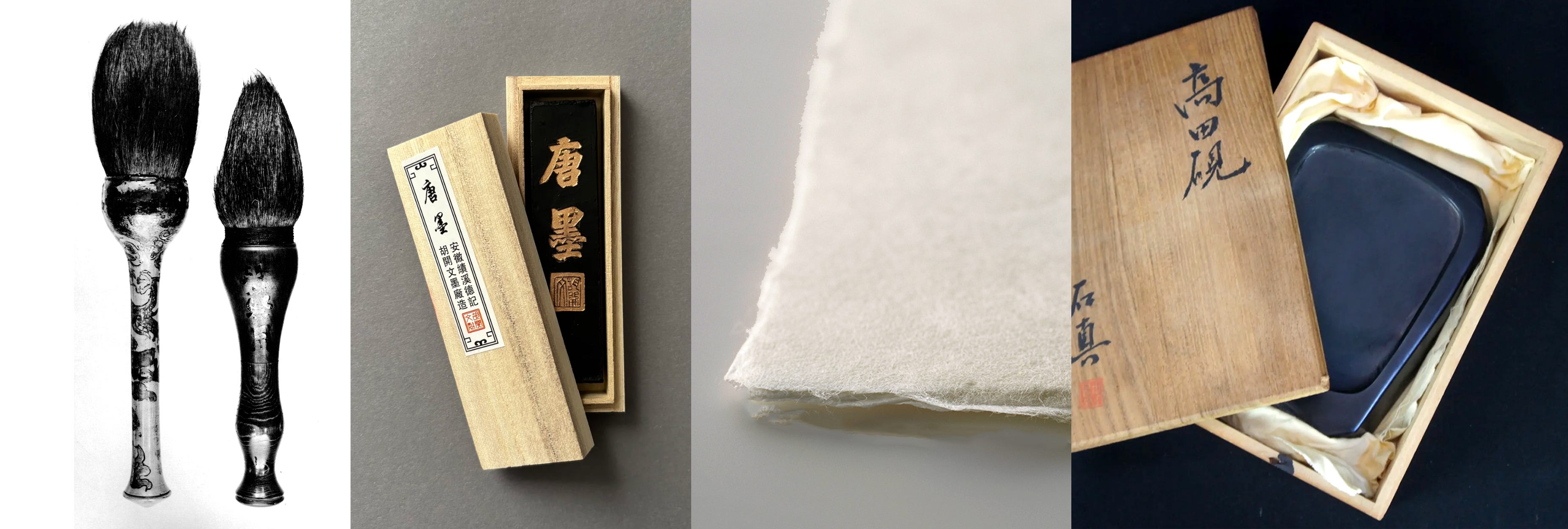
Some folks haven’t been to their first in-depth calligraphy workshop yet, so here is a short list of supplies that are essential. Obviously, there are different areas that vary widely, such as pointed pen vs. broad-edged pen supplies, but these things are essential, no matter what script or form you will be using.
Beginner’s basic go-bag:
Paper - Canson Sketch Pads are reliable, at a size you can carry easily
Pilot Parallel Pen - a broad-edged cartridge style pen in a variety of sizes
Pencil - No. 2 standard or an automatic lead pencil or charcoal pencil
Marker - Tombow Monotwin has two tips for variety
Alternatively, you can order the Tombow Lettering Set which has:
2 Tombow Dual Brush pens (1 Black and 1 Light Gray for shadowing)
1 Fudenosuke calligraphy brush pen
1 Mono Twin permanent marker (has two points, medium and fine)
1 Mono drawing pencil
1 Mono eraser
Instruction guide
Travelling with liquid ink involves some risk, but in my student days I used to have a bottle of Higgins and a couple of pointed dip pens in my purse at all times. I drew everything, from stones and dirt to leaves, people, and buildings, to letters seen and invented. Be enthusiastically present and observe.
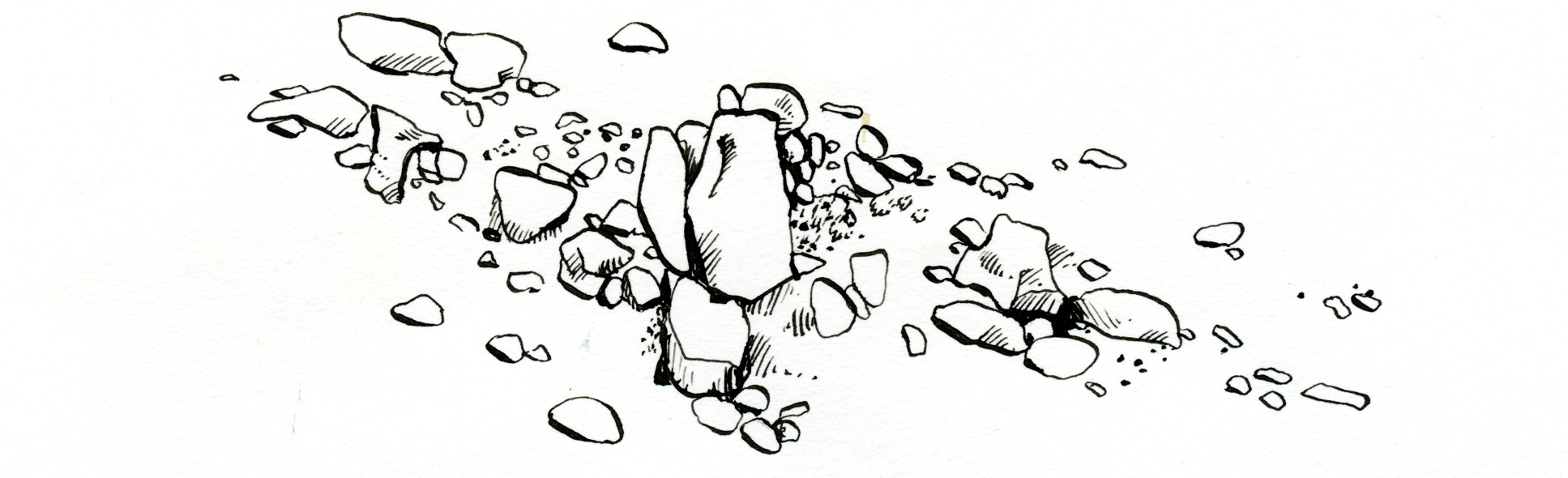
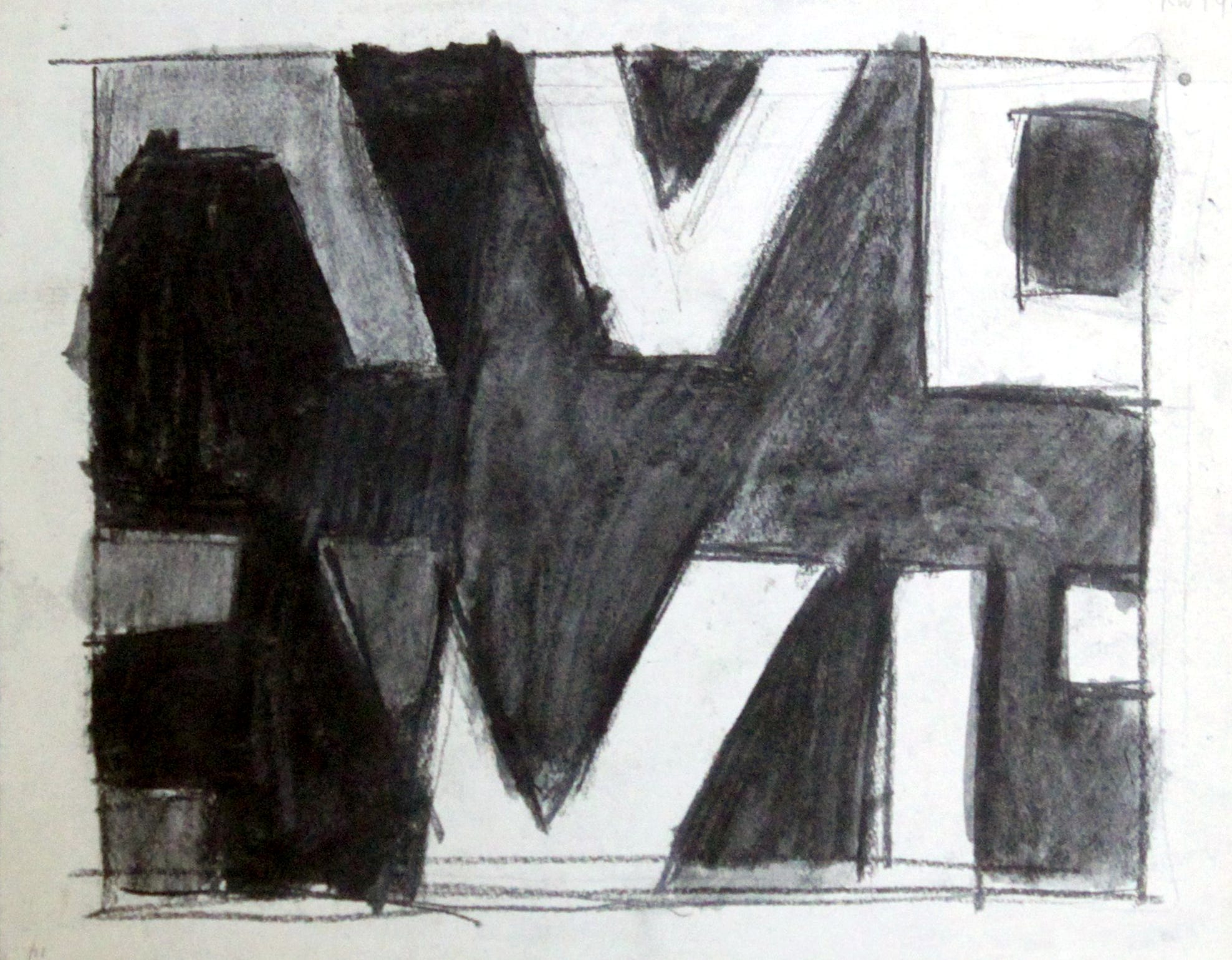
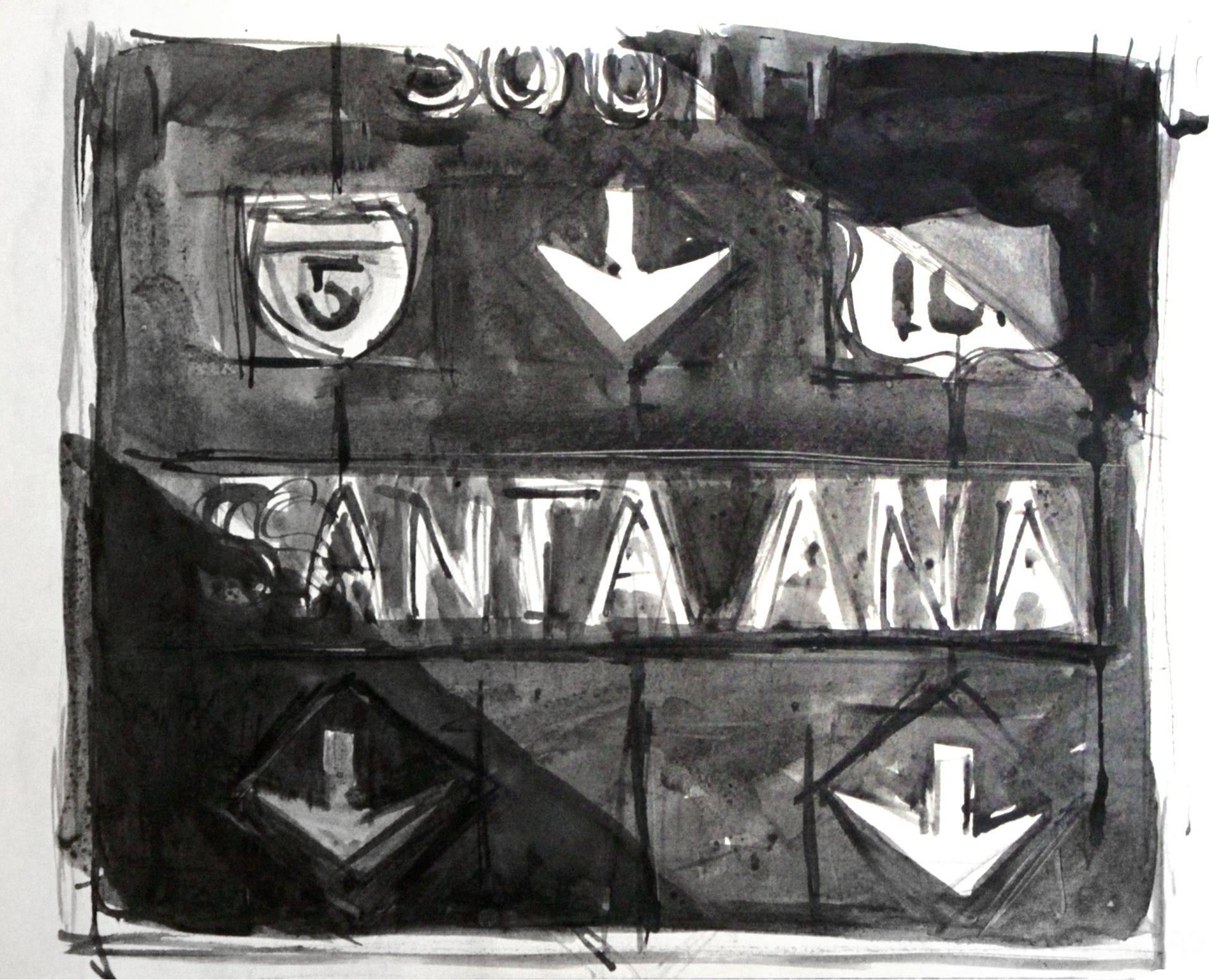
When drawing letterforms we focus, draw, distort and refine. It’s a way to check our perception, follow a new arrangement of curves and straights, and feel the structures and implied force fields. How quickly do you draw? Do you favor outlines or mass? How long do you stare at the subject, burrowing into its molecular construction with x-ray eyes, et cetera. A 5-second drawing can be as informative as a 10-minute sketch. As a passenger in transit, the letters you see may be as simple as a logo on someone’s clothing or luggage, or on a way-finding sign. Many off-site sketches are developed later in the studio. Artist Roger Kuntz used gouache, graphite and charcoal in these drawings from his 1962 exhibit Signs of LA. These are notable for their figure/ground design, his control of grayscale, and in particular his use of cropping.
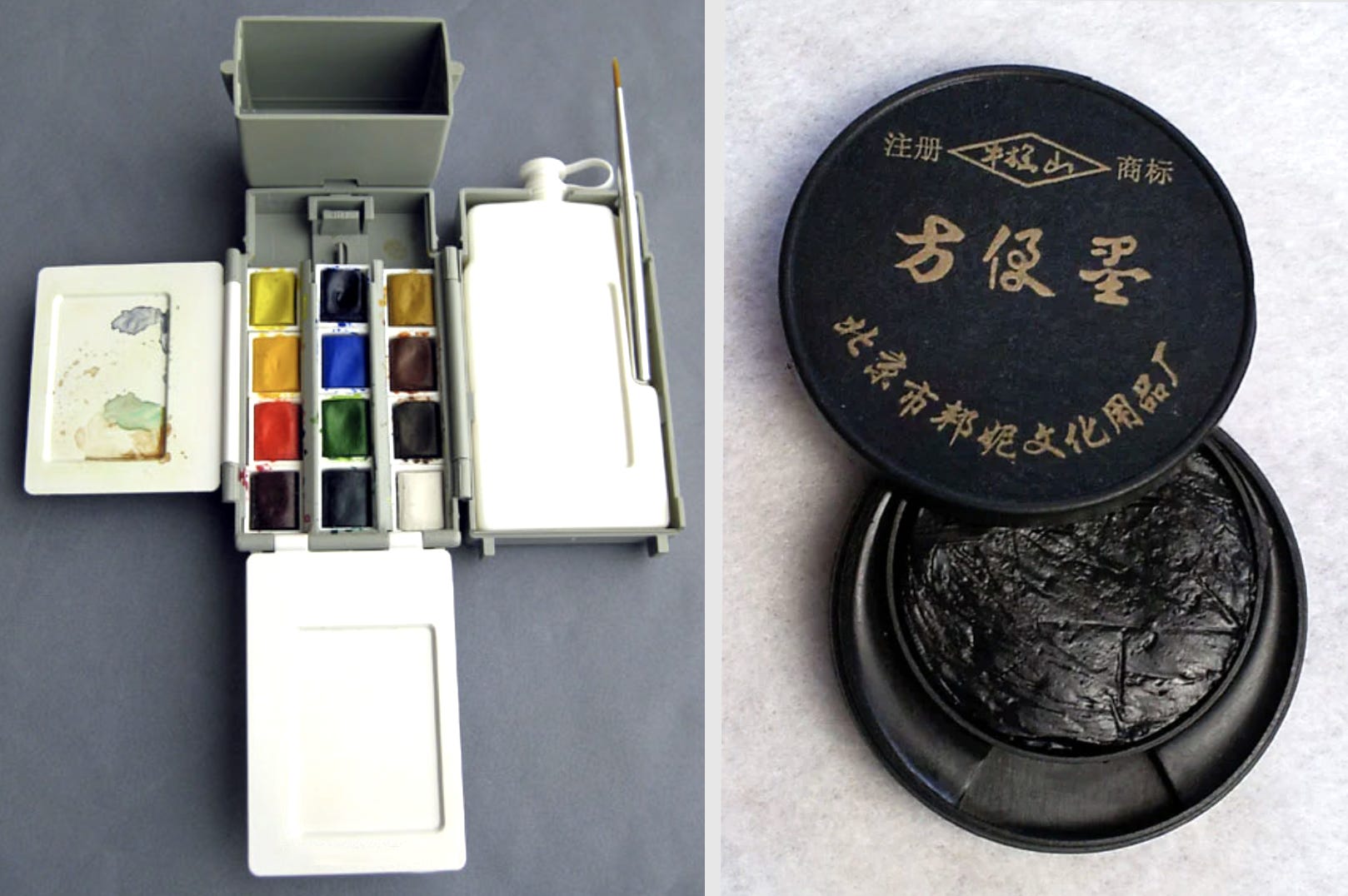
For the seasoned pen warrior the bag may need to be a little bigger. A backpack accommodates drawing pads, with zippered compartments to protect brushes and pens and well-designed pockets of various sizes. Dry media like charcoal sticks and pencils, and pan pastels for color, fit in small cases. A white nylon eraser or kneaded gum is handy. A tube of gouache is essential for washes, and a traveller’s watercolor set includes a small water flask, brush, mixing palette, and water cup. Check out Chinese convenience ink as well. All you need is a brush and water to make your blacks and every shade of gray. There is a small well for water and recessed curves for mixing tints and shades. Learn to feel comfortable lettering with a brush.
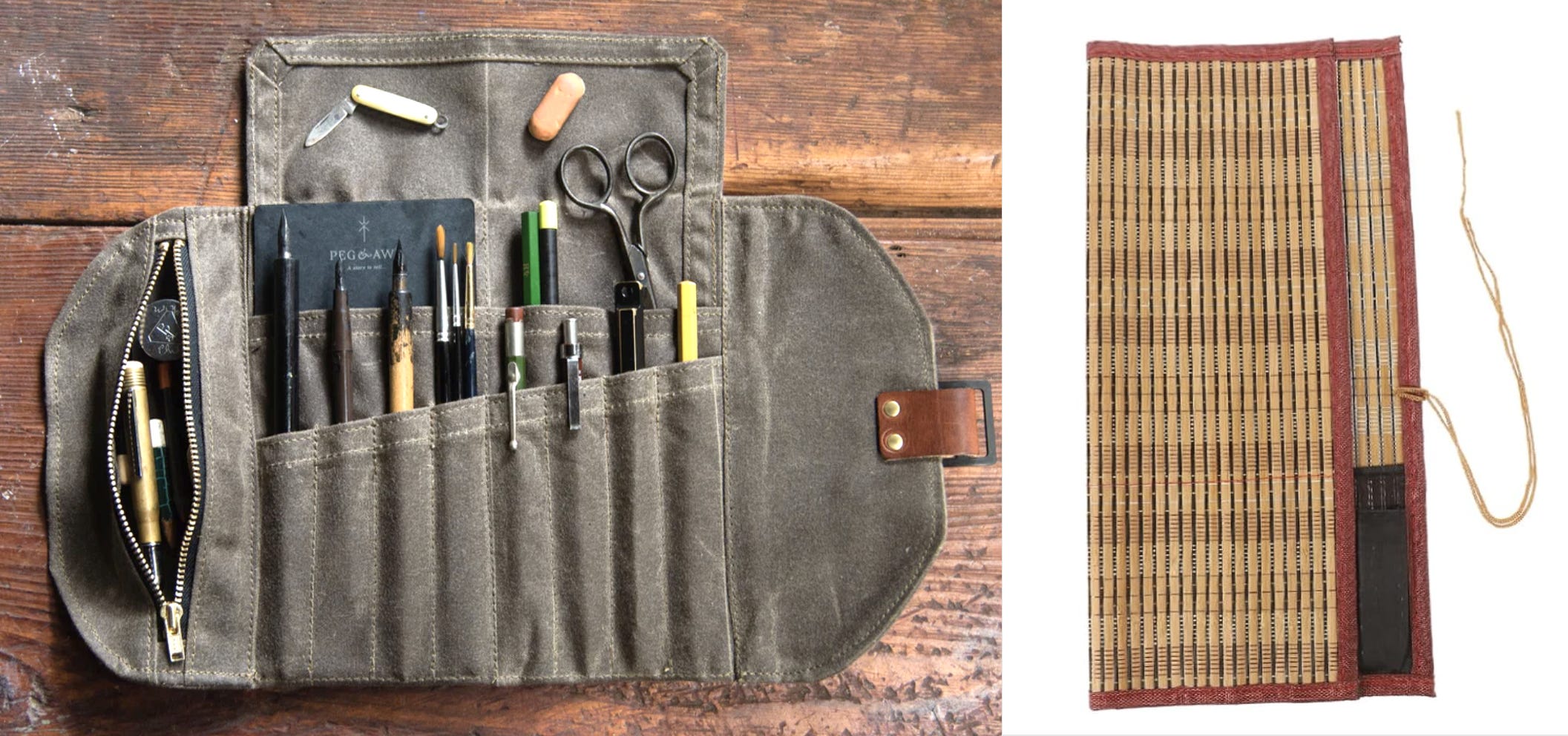
Compact rolls are made for the travelling scribe. This nice one is by Peg & Awl, but you can make a bamboo rollup with a sushi mat and some elastic.
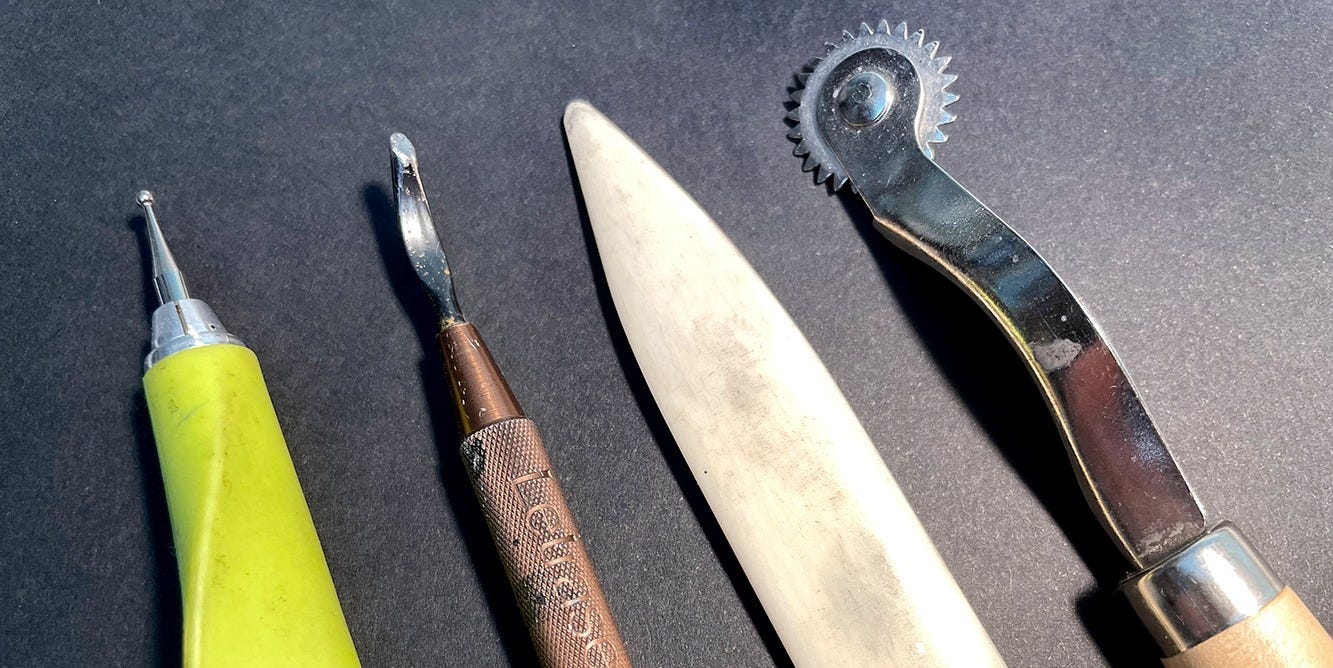
My Scriptorium bag for four days and evenings will be a large tote and a portfolio with flat sheets of archival paper. I’ll bring a bamboo roll of many sizes of nibbed pens, including pointed and broad-edged, some hefty brass ruling pens, a few homemade tools, flat and round brushes of all sizes, and scoring tools.
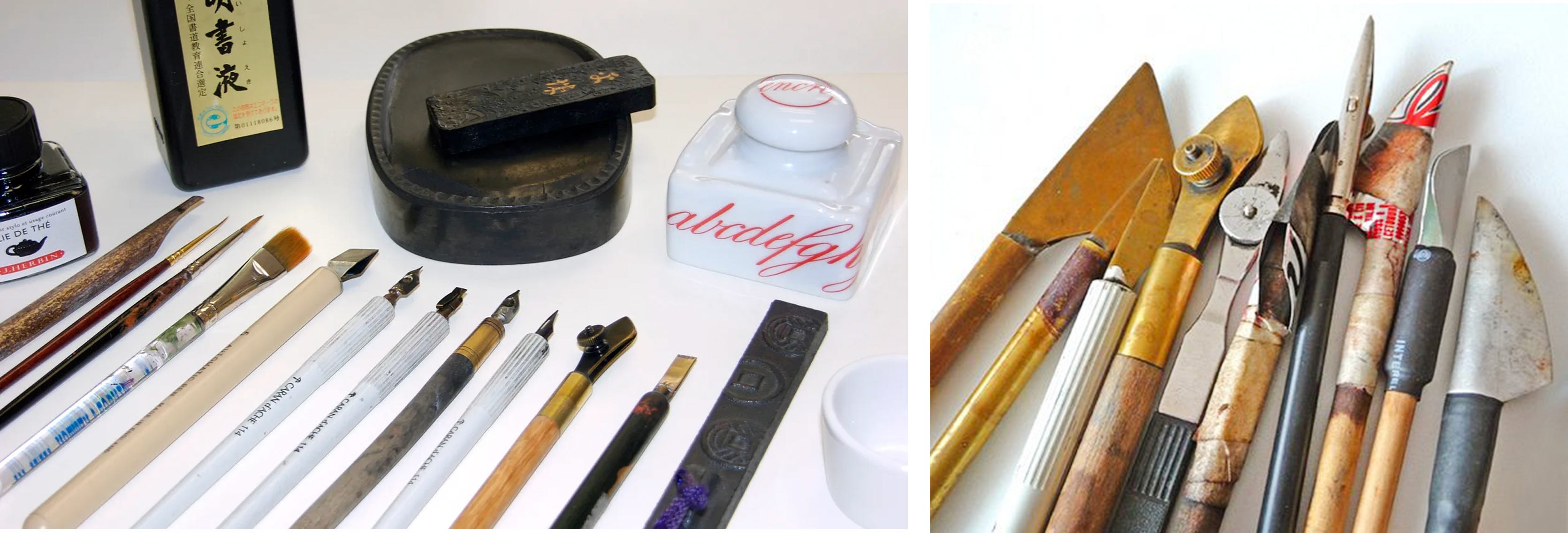
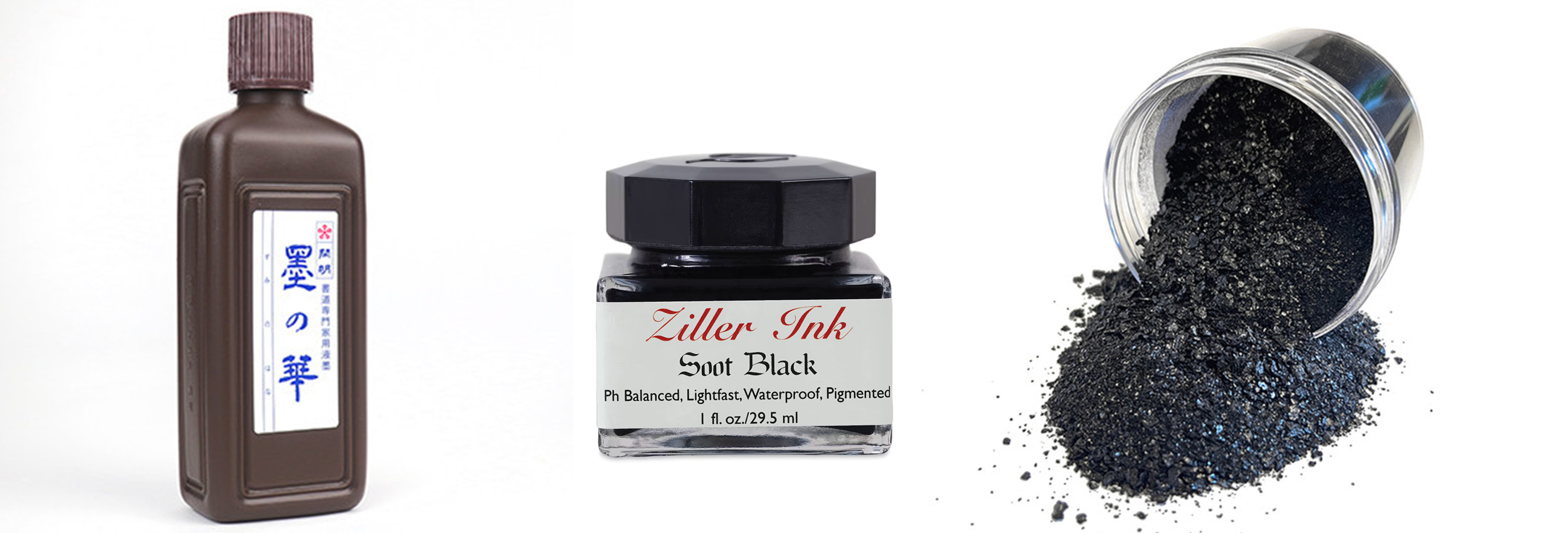
For inks, I like the Japanese Best Bottle sumi from John Neal, Ziller’s Soot Black acrylic ink for layering, and Walnut Ink from peat crystals.
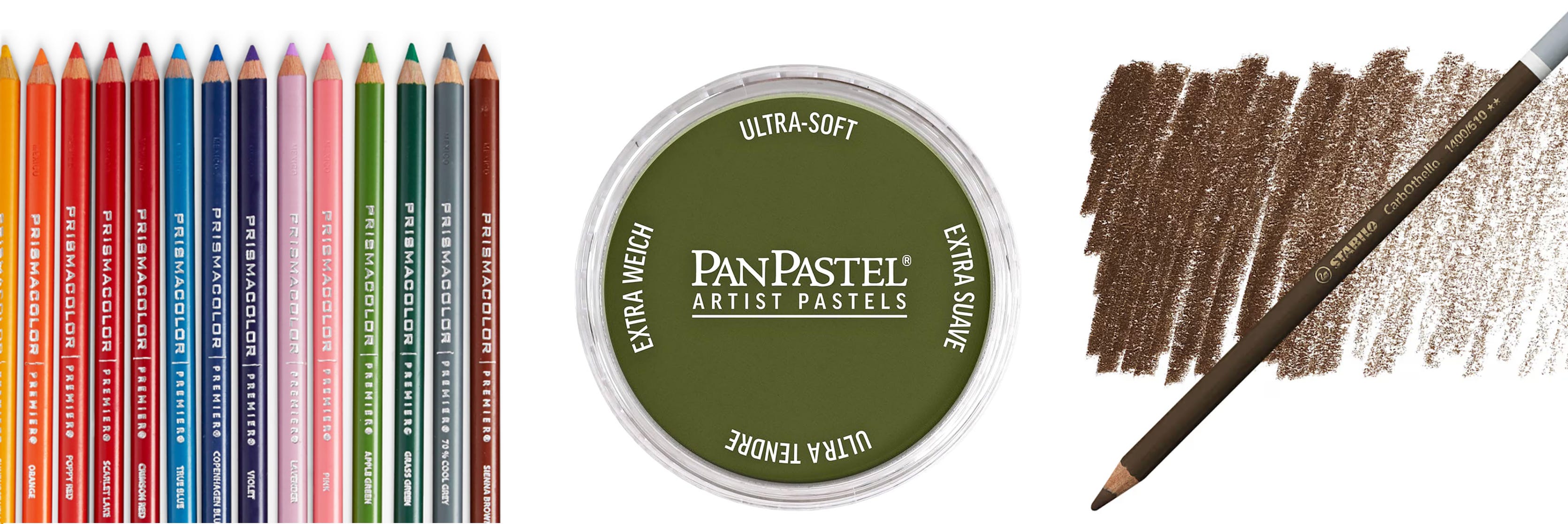
For dry media I use Prismacolor waxy pencils, soft Pan Pastels, Stabilo Carbothello pencils, charcoal (vine, round compressed, square ultra-black, pencil), and (not shown) a Wolff’s Carbon Pencil, and Conté Crayon sticks in earth shades.
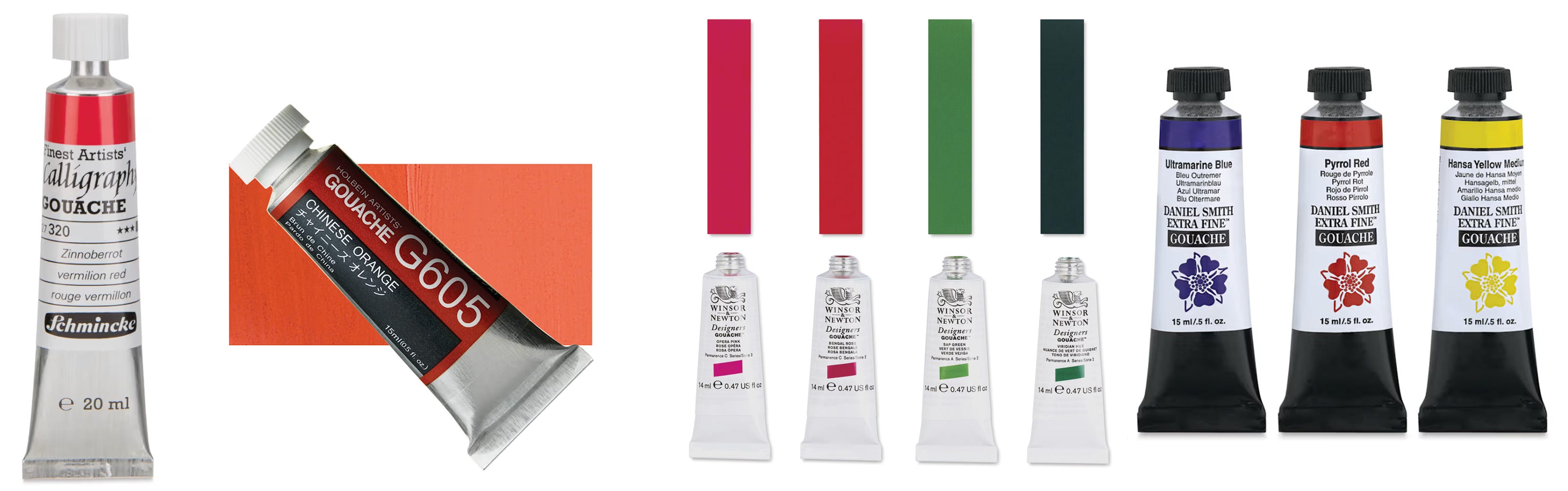
I use tubes of gouache and watercolor by Schmincke, Holbein, Winsor & Newton, and Daniel Smith. Pigments are unique, and different brands offer a preferred mix.
From the studio I will bring a few reference books and models, plus palettes and containers, x-acto blade, ruler, t-square, sponge, tissue, rags, water bottle and a good seat cushion. And last, but not least, a badge I worked up for my spouse, who has made it his task to help me hoist a version of my studio to retreats and workshops over the years!
Thank you all for reading and enjoying my posts. It’s great to be here with you.
ONLINE SUMMER 2026!
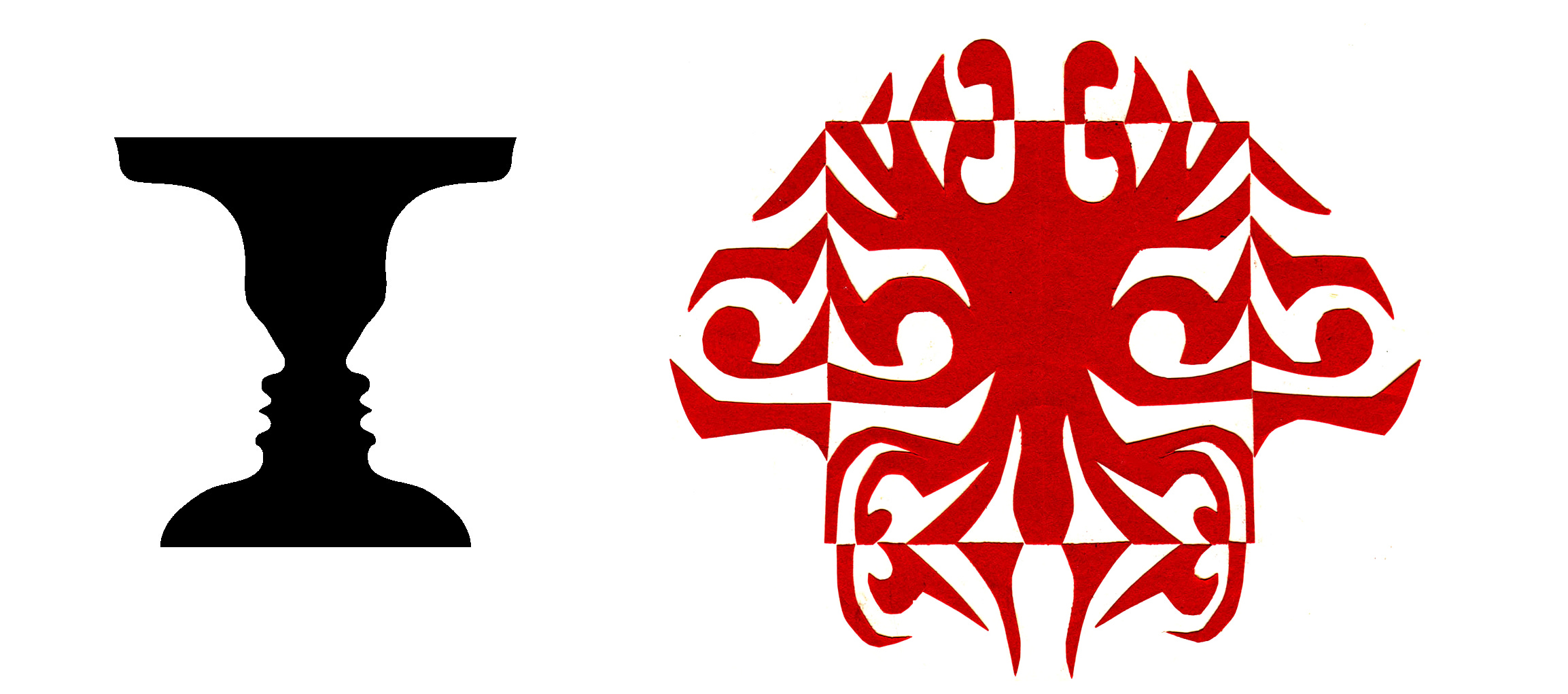
ART 232: The Design of Light and Dark: Text Art and Notan will cover optics, figure/ground theories and compositional methods in art, design, and letterform. I’m looking forward intensely to plunge into this area with you.
PRODUCTS
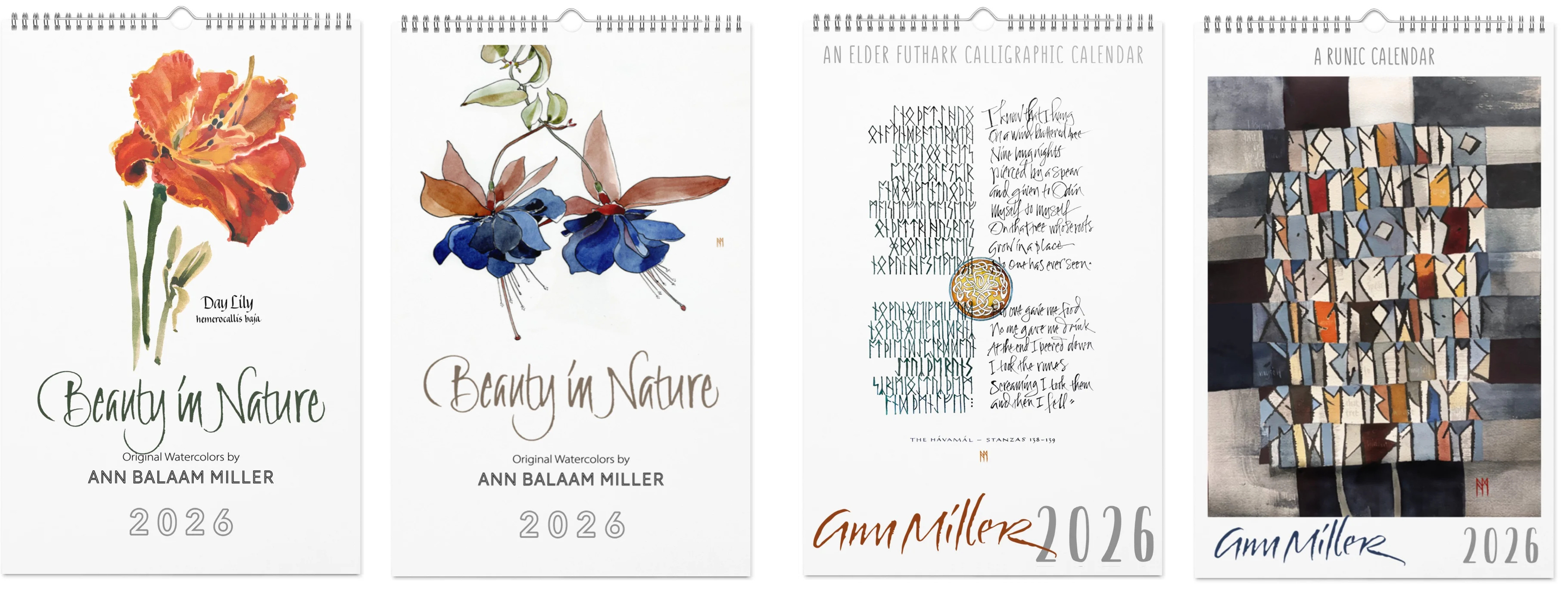
In my shop there are four art calendars for 2026 (it’s never too late!) and a few other items (mouse pads, mugs, pillows, scarves, jigsaw puzzles, and more). Email me for info or assistance with a custom order.
This blogpost on Substack will always be available free. The “paid” area is more interactive, with exercises and activities, discussion, and individual one-on-one conversation and critiques, like an online tutoring session. Your contribution is always appreciated, and helps keep my writing coming your way.
PAID SUBSCRIBERS: All paid subscriptions are now $75 annually or $7.50 monthly. I am eager to devote time to interactive projects and individual discussions on this basis. Invest in improving your graphic skills, design perception, and performance in the visual arts, handwriting, letterformation, and calligraphy.
EDUCATIONAL DISCOUNT: I offer a 50% discount on the annual paid subscription for art instructors and those in the art education field.
A paid subscription gives you access to ongoing conversations on my chat feed, permanent access to all archives, and access to exercises and how-tos. Let’s continue to talk about art and keep it fed, nourished, and productive.
Thanks for sharing your tool kit!