

Runes and Art
Sharing some amazing outcomes from students in my runes classes.

When a concept lands in the right place, results occur.
The power of studying Elder Futhark
Who could imagine the outcome of simply learning to decipher Elder Futhark runes? Every time I teach Calligraphy Design and Norse Runes a few students walk through the door and encounter a new way to write. Why give time to runes, you might ask! Some are inveterate puzzlers, others have a lifelong interest in Germanic languages, history, and literature or a strong Scandinavian heritage. Some are typographers and artists hungry for more material, or calligraphers eager to explore a new mode of handlettering. Others, retired from their careers, may want something engaging for their free time. It’s meditative, educational, physical, and very satisfying for people who are makers at heart.
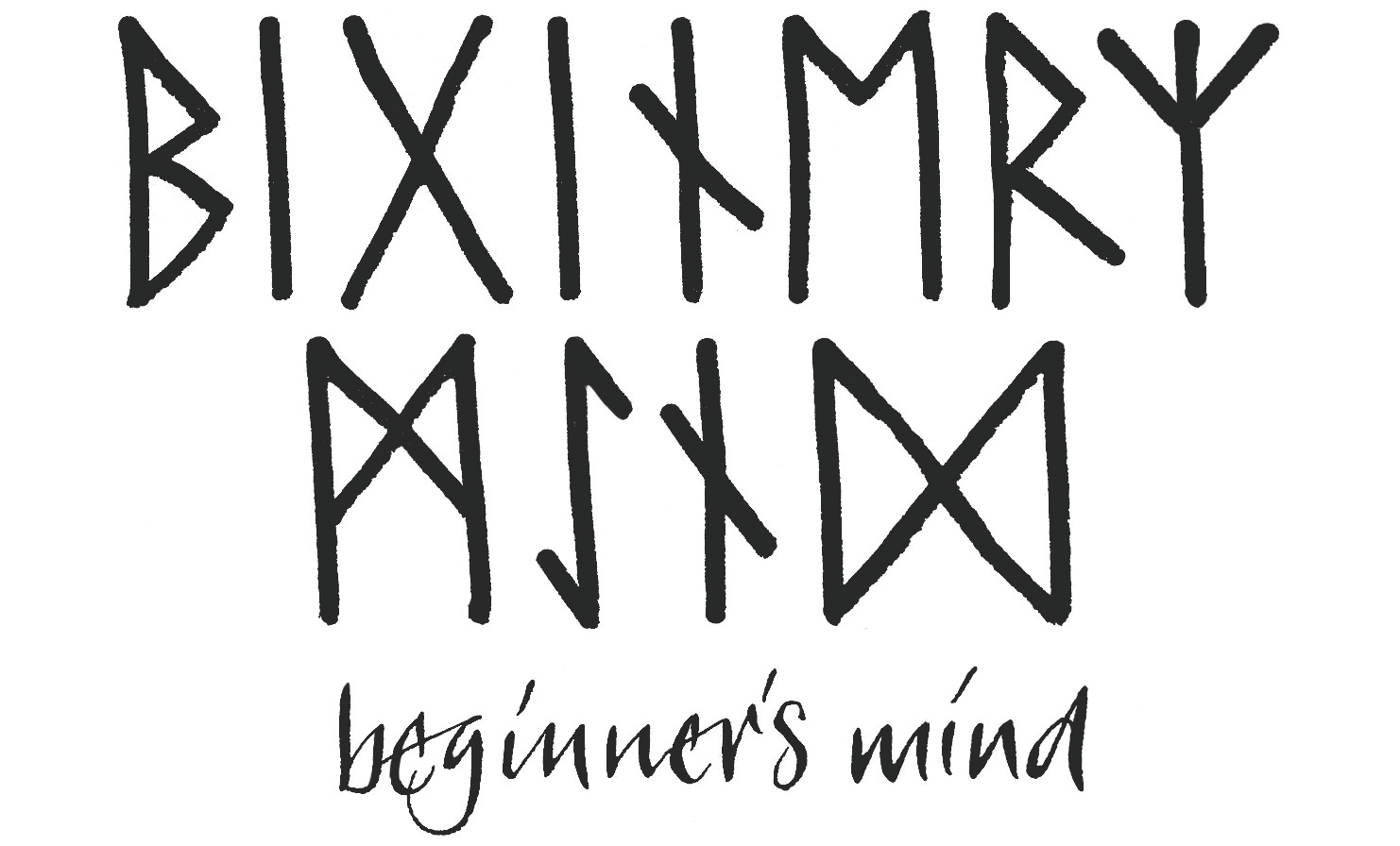
There are many directions that can be taken when working with runes, and it depends (as everything in life seems to do) on one’s level of commitment and prior experience. I want to give a little air time to those students who have gathered their many areas of expertise into powerful expressive art using runes.
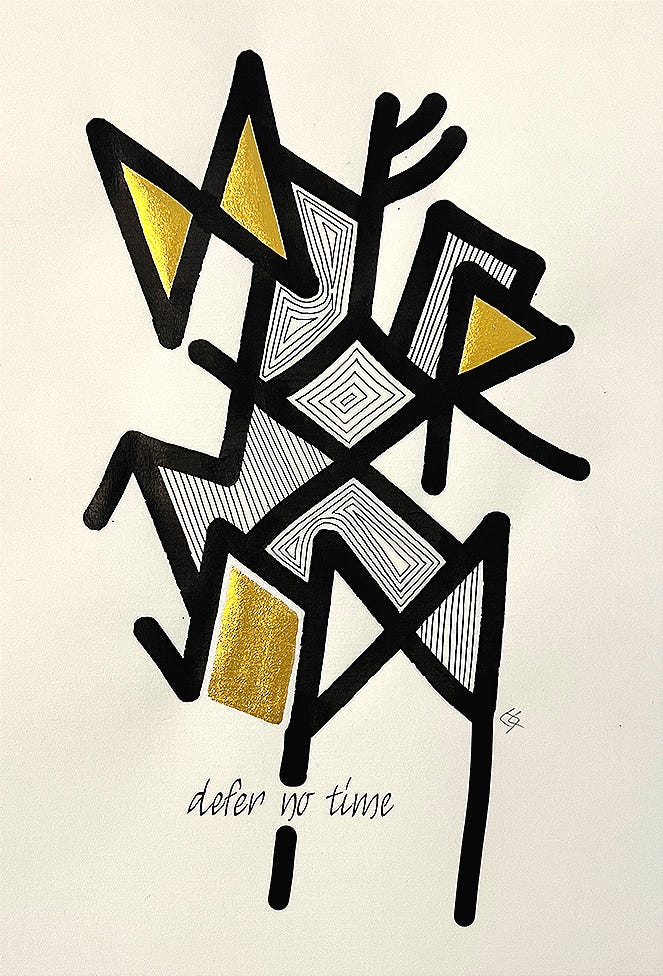
First, we design.
Using new and unfamiliar tools helps the student shed habit energy, launching new awareness of how to configure line and shape for high visual impact. The student translates a short phrase into runes, using careful placement to make well-defined and memorable counters. In the figure below, the perimeter engages with the background with a consistently interlocking structure. Spatial effect is generated by the contrast between the advancing angular warm gold shapes and the variations in fills that appear to sit on different planes through careful management of intervals and directions. Given a few specific directions, the outcomes are instructive to each individual.
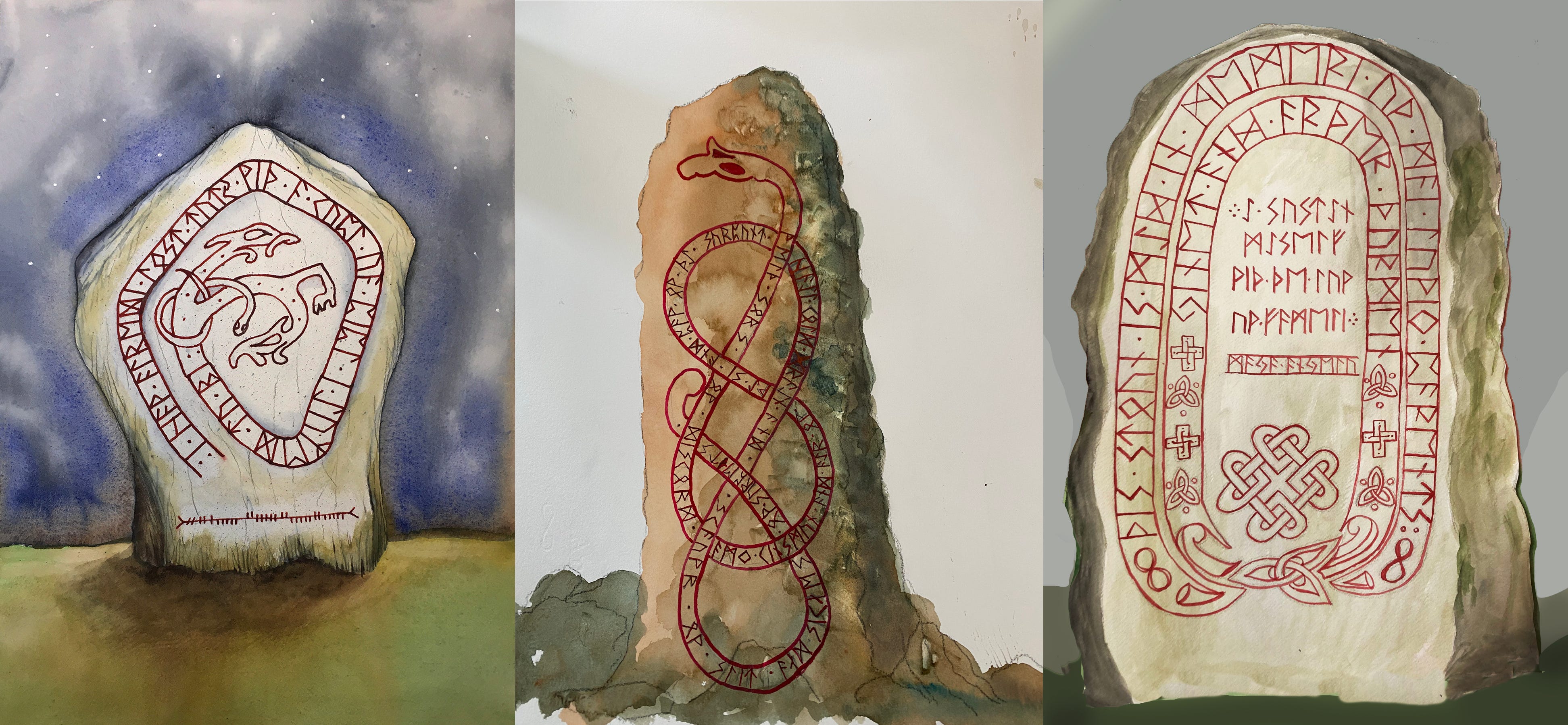
Next, we make runestone drawings.
Once you learn how to transliterate English into Elder Futhark (easy), you can organize the runes into the traditional ribbon or serpentine configuration. Classical knotwork and animalistic shapes from historical examples supply form and spiritual meaning. The runestone drawing exercise presents the challenge of fitting your text to a confined space as you shape the ribbon. This exercise builds confidence in controlling line and managing negative space, and points out where to adjust for arbitrary or unwanted tangencies and visual sticking points. Design flow is important, and is the crucial factor in whether the art is successful. The runestone drawing is a combination of representation and literate fantasy, evokes mood, and becomes a convincing 3D illustration, perhaps for an even larger story.
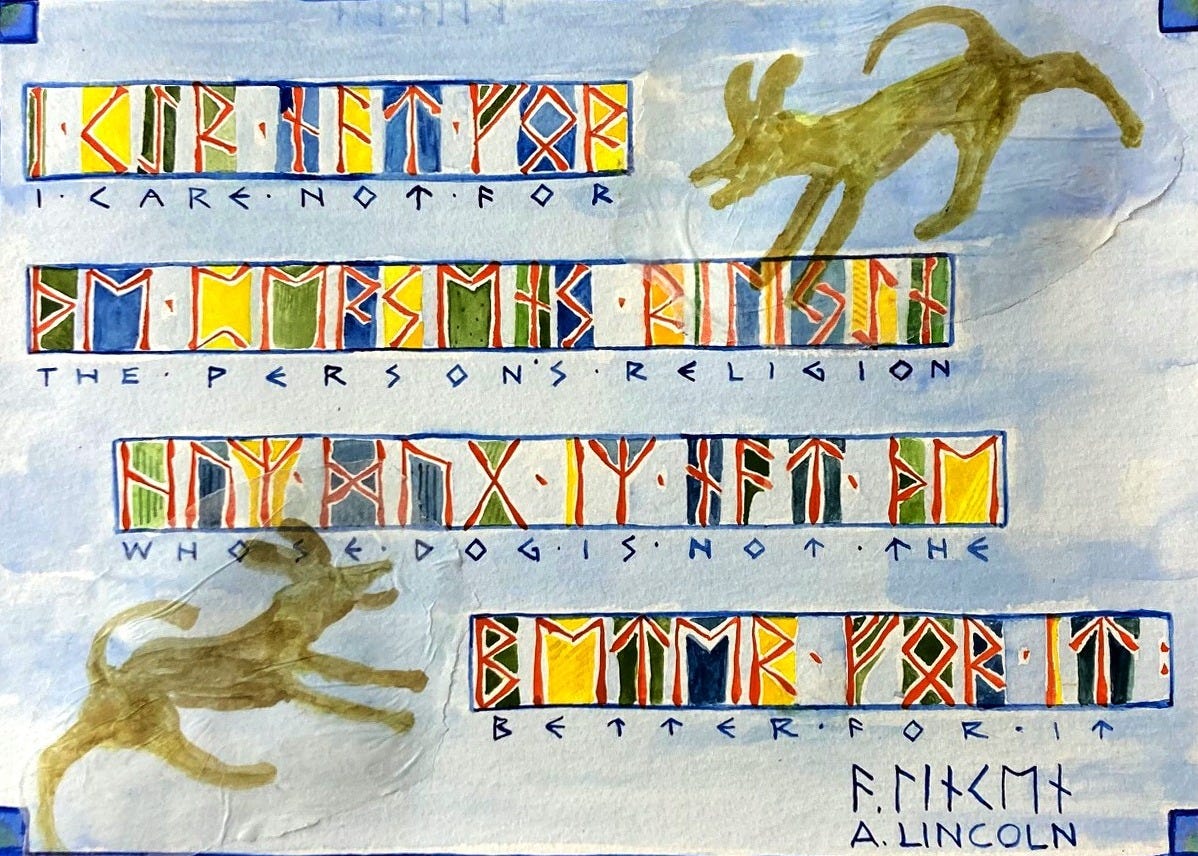
And two-dimensional storytelling compositions.
Students are given free rein to make a full page design including runes, illustration, watercolor washes, collage, and their own quotations and texts. For some, this broadside composition is a first, involving synthesis of disparate elements.
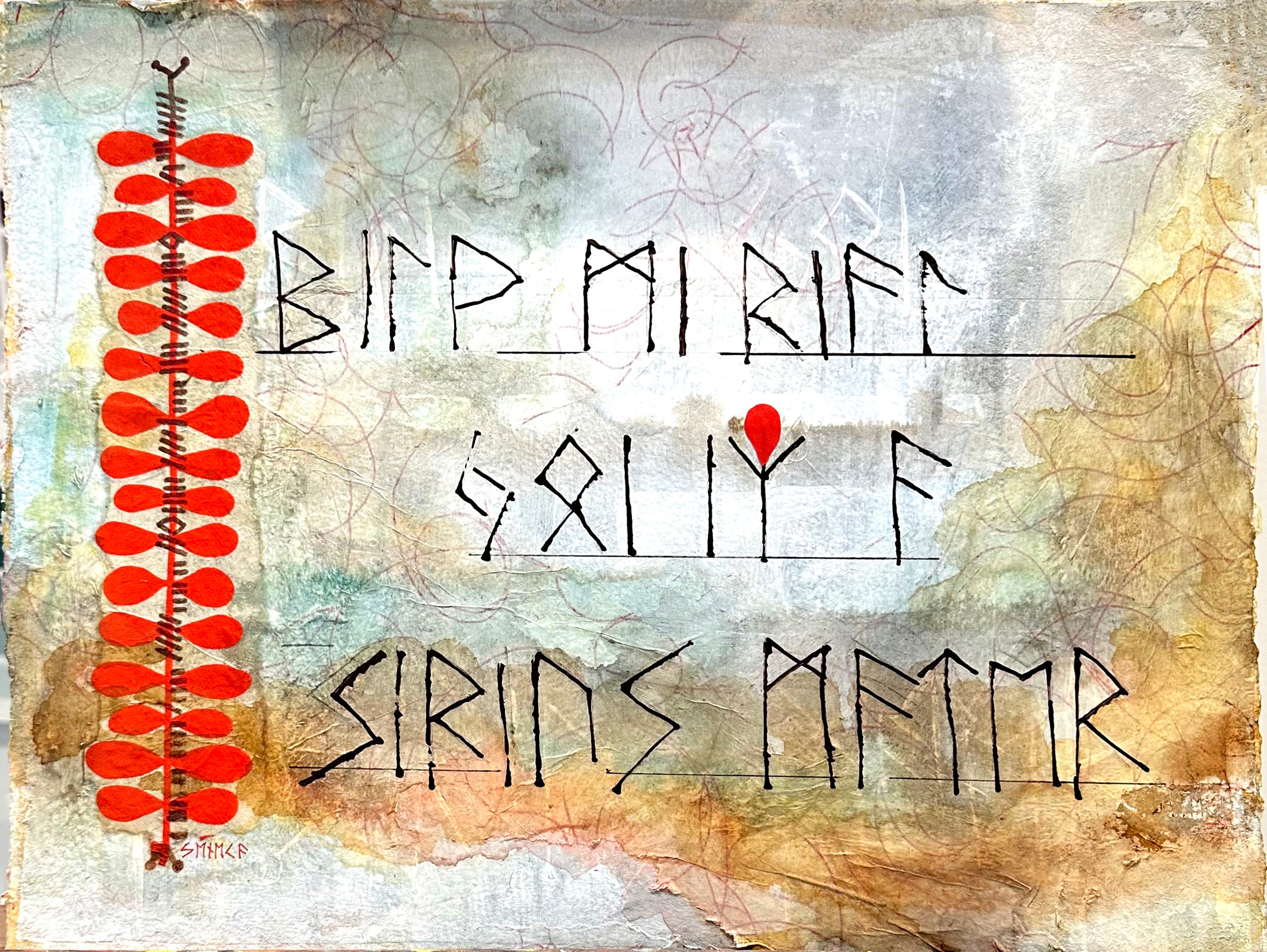
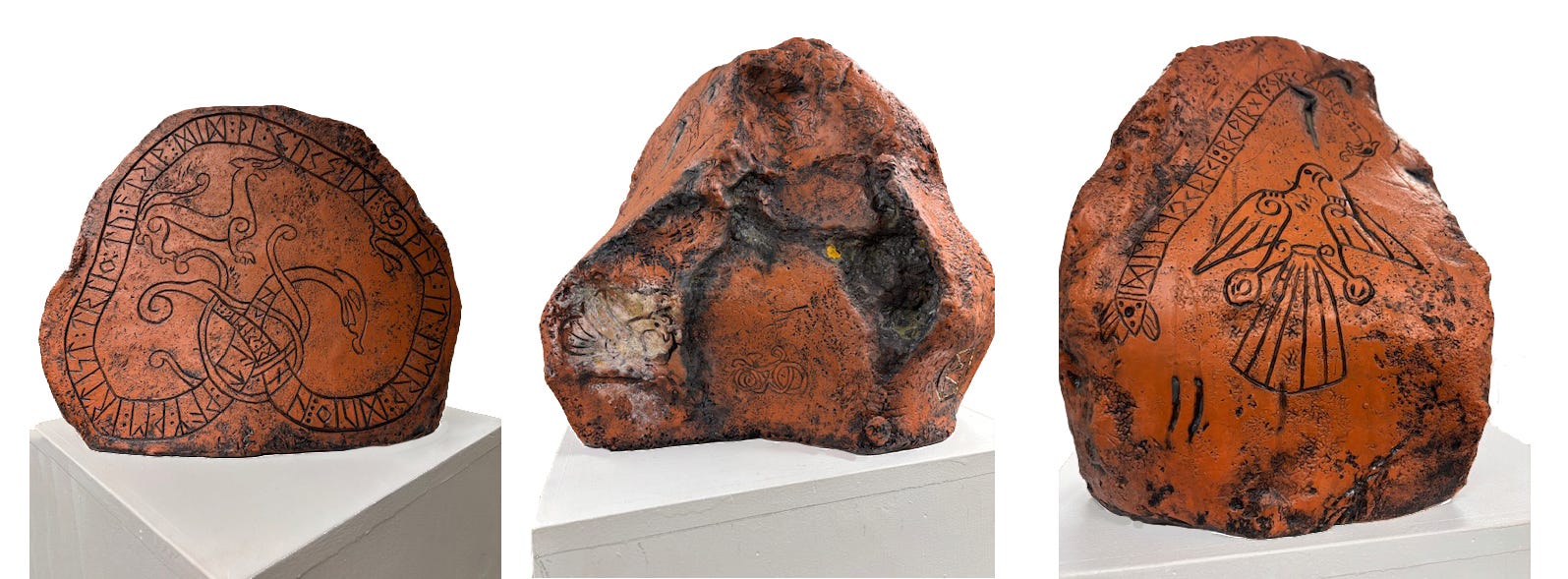
And surprisingly, even runestones as sculpture.
One of my recent students is the celebrated ceramic artist Deborah Lynn Hansen. Her unique skills take the study of Elder Futhark to another level entirely. In her own words:
I find that conversations over time are the most interesting. My runestones are carved in Elder Futhark with quotes from well-known speeches and mundane conversations that I’ve found inspiring in ways big and small. The runestones are red earthenware, carved and textured. — Deborah L. Hansen
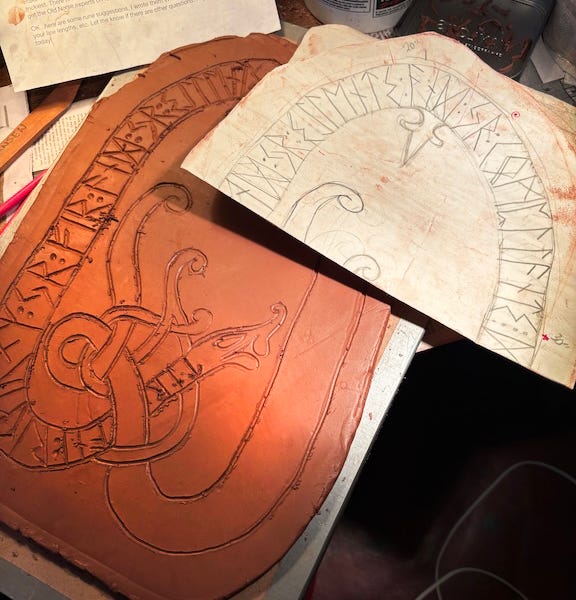
The following three-dimensional runestone sculptures are from Hansen’s studio. They are included here because of the relevance of the artist’s voice to our global conversation. The art exhibit is the artist’s bully pulpit, their chance to be heard. Included are the rune translations along with some of her comments.
Tyranny runestone
Front face: “Tyranny requires your fear and your silence and your compliance. Democracy requires your courage.” —Illinois Governor Pritzker, State of the State Address, 2025
Reverse: “Most people are good.” Her own words.
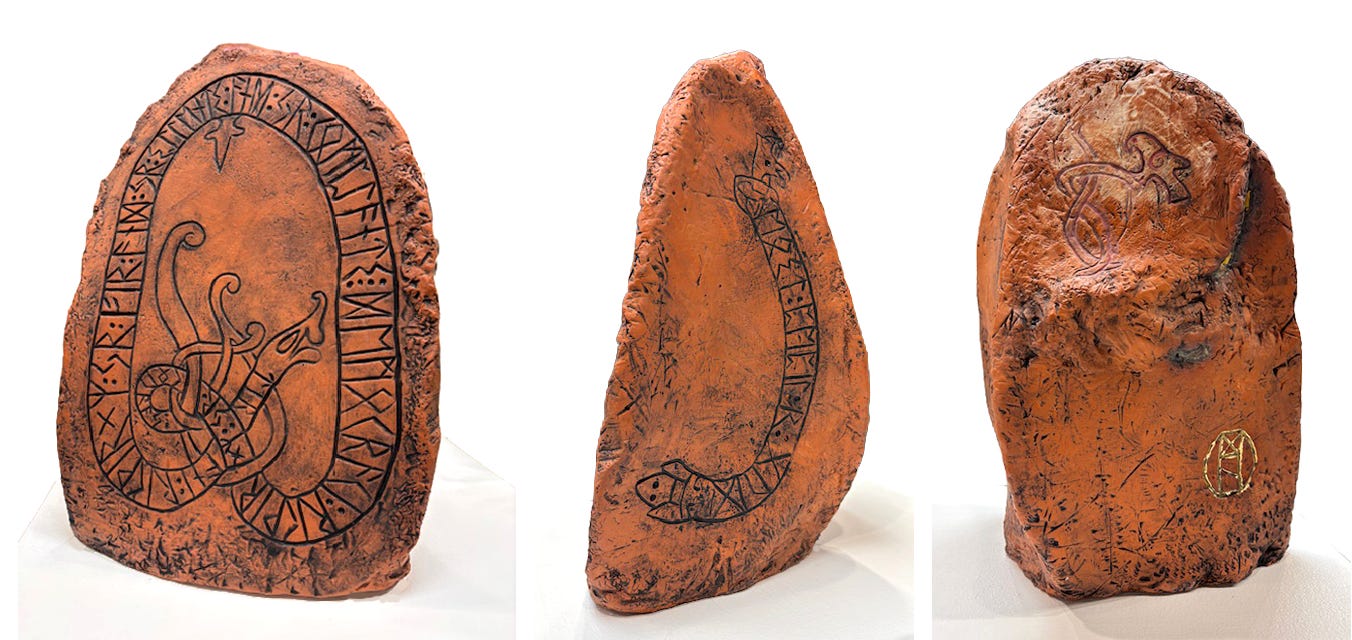
Children runestone
Front face: “The children are always ours… all over the globe; and I… suspect that whoever is incapable of recognizing this may be incapable of morality.” —James Baldwin
Reverse: “Knit on, with confidence and hope, through all crises.” —Eliz Zimmerman Third face: “Never Give In” with initials WC for Winston Churchill.
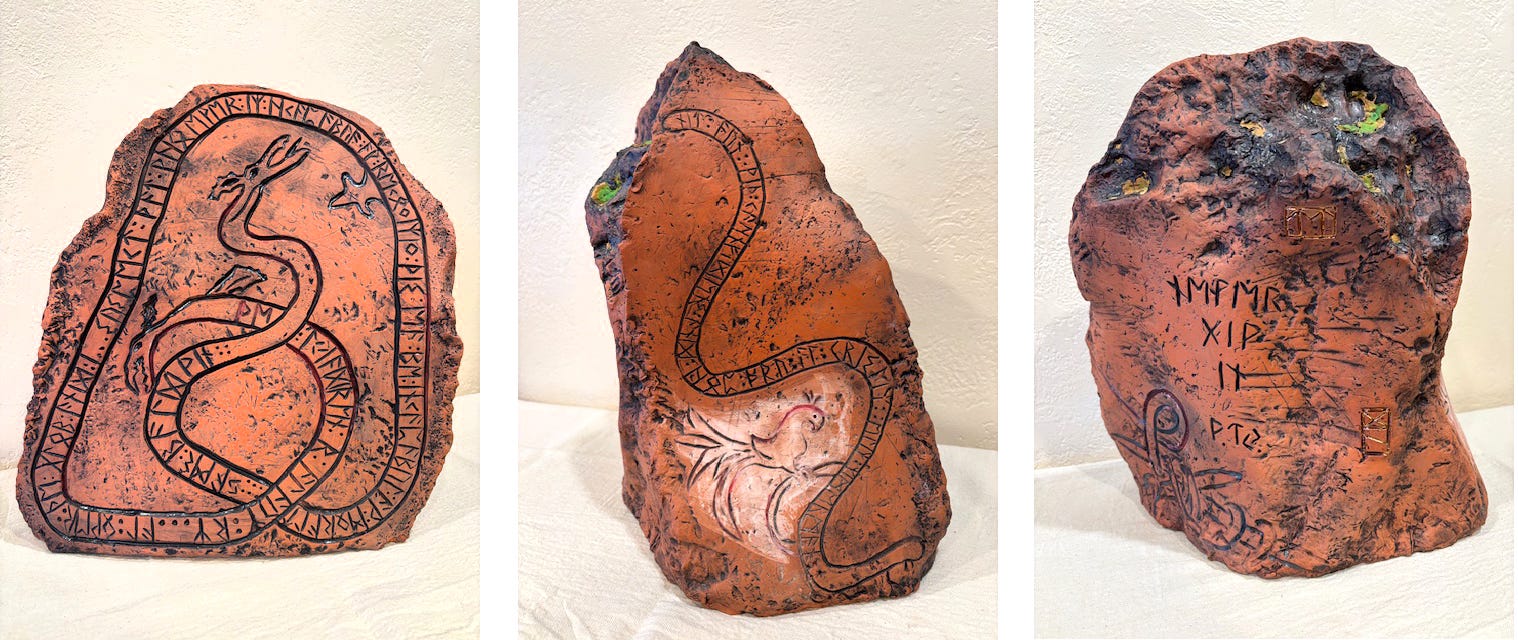
Is Art Worth Doing? runestone
Front face: “What was the artist trying to achieve? Did they succeed? Was it worth doing?” —Henry James (1884)
Reverse: “Democracy requires your courage.” —D. L. Hansen
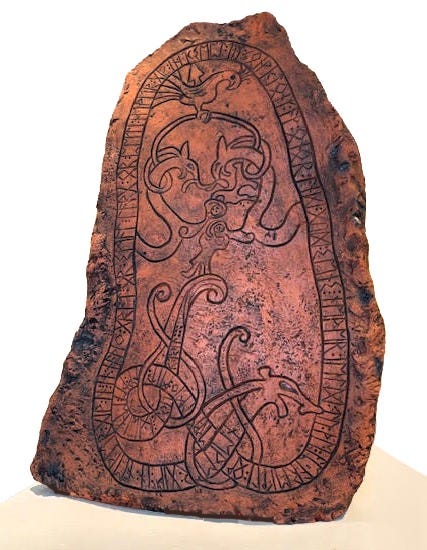
Never Give In runestone
Front face: “Never give in, never give in...In nothing, great or small, large or petty, never give in except to convictions of honor and good sense. Never yield to the apparently overwhelming might of the enemy.” —Winston Churchill, 1941
Whatever you embrace, do it with full conviction. Learning a new “thing” to use in your art often requires taking a workshop or a class, where you have an instructor who is engaged in everything you do, offering relevant critiques and spontaneous ideas as you keep working toward your goals. An instructor is there to strengthen and invigorate your own creative process with their knowledge and perspective.
The visual voice is heard by those who see and feel. The interesting thing about tactile sculpture is that it can be “read” by those with impaired vision. The point gets across.
Thank you all for reading and enjoying my posts. It’s great to be here with you.
ON SCHEDULE FOR SUMMER 2026!
I JUST GOT THE EXCITING NEWS YESTERDAY, January 31, 2026 that my proposed third class for Stanford Continuing Studies is scheduled to go live this summer. Based on Notan, the dark/light theory of design, it will cover optics, figure/ground theories and compositional methods in art, design, and letterform. I’m looking forward intensely to plunge into this area with you.
PRODUCTS
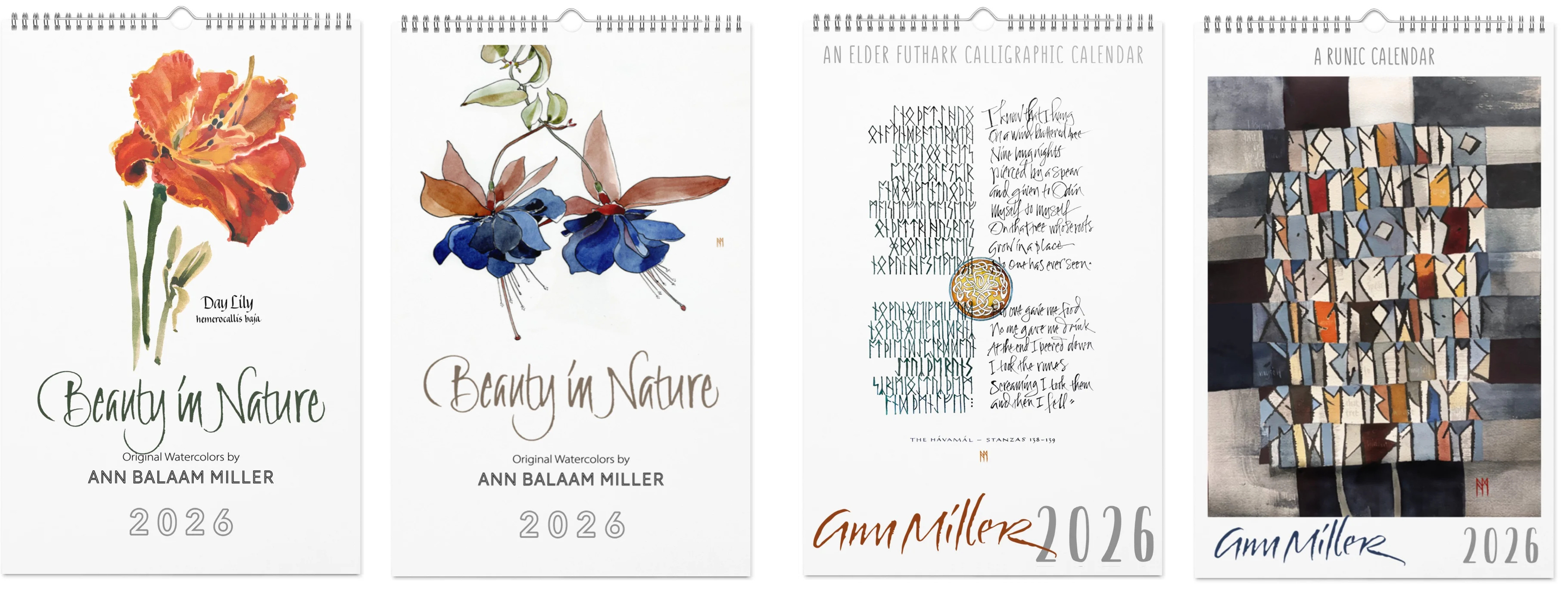
In my shop there are four art calendars for 2026 (it’s never too late!) and a few other items (mouse pads, mugs, pillows, jigsaw puzzles, and more).
A few spots are still available…
…for my upcoming class at Stanford Continuing Studies. Suitable for all levels, it covers everything you need to know to support your interest in handwritten letterform from Roman Majuscules, Uncial, and Blackletter to classical Italic, contemporary freehand writing and page design. Check out the complete description on my website and download the syllabus & supplies list on Stanford’s page here: Calligraphy and Letterform: History, Methods, and Practice. Canvas opens next Wednesday 2/4 and zoom begins on February 11, 2026.

This blogpost on Substack will always be available free. The “paid” area is more interactive, with exercises and activities, discussion, and individual one-on-one conversation and critiques. Your contribution is always appreciated, and helps keep my writing coming your way.
PAID SUBSCRIBERS: All paid subscriptions are now $75 annually or $7.50 monthly. I am eager to devote time to interactive projects and individual discussions on this basis. Invest in improving your graphic skills, design perception, and performance in the visual arts, handwriting, letterformation, and calligraphy.
EDUCATIONAL DISCOUNT: I offer a 50% discount on the annual paid subscription for art instructors and those in the art education field.
A paid subscription gives you access to ongoing conversations on my chat feed, permanent access to all archives, and access to exercises and how-tos. Let’s continue to talk about art and keep it fed, nourished, and productive.