

After the project, what?
Stand and move, reflect, and get ready for change.

Time out!
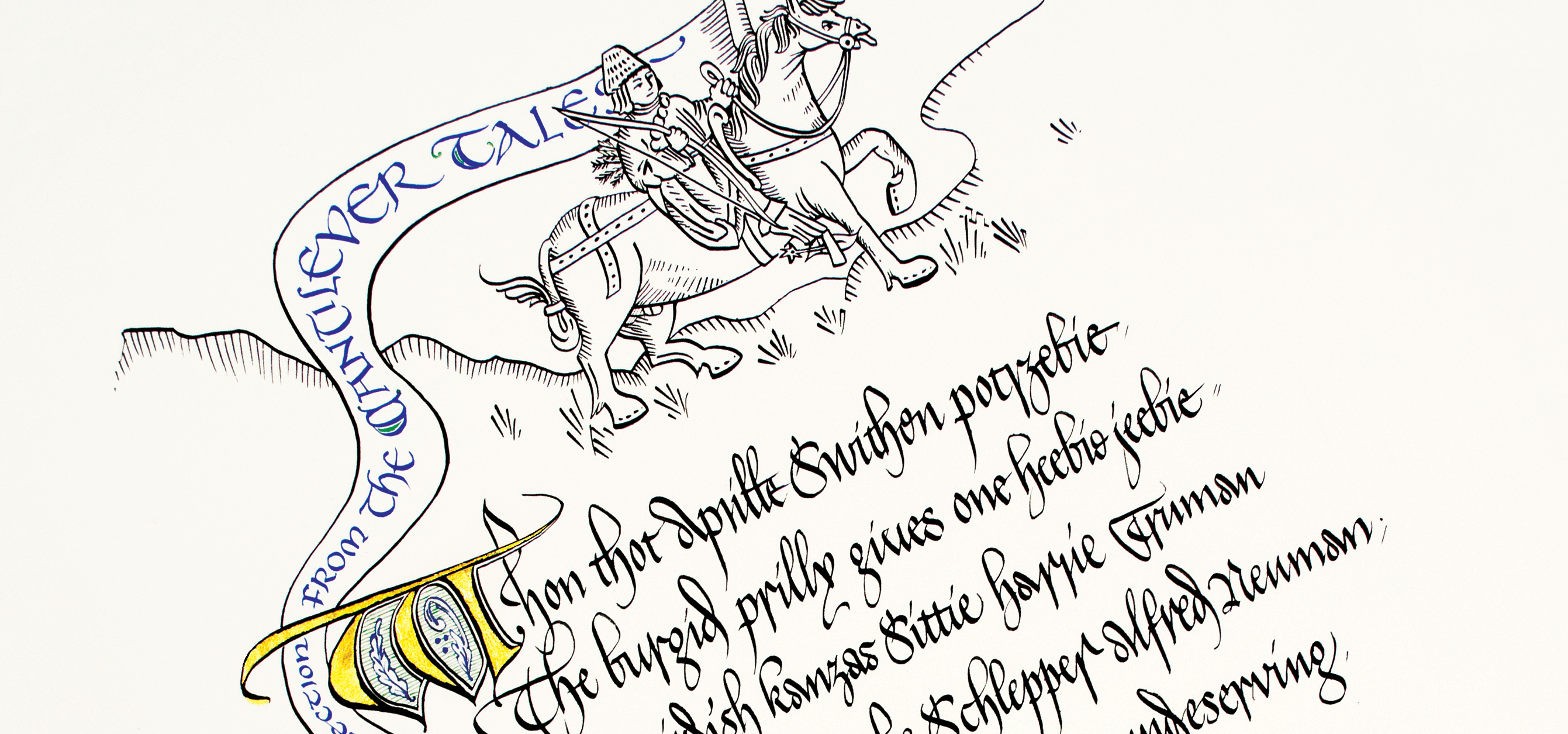
When you put down your pen after a writing session, what happens next? Usually a good stretch is in order. Stand up and reach for the sky if you’ve been sitting. Or if you write standing up, as I often do, lie down and reach for the sky with your feet! Bend, and do the opposite of what you’ve been doing for the last hour or two.
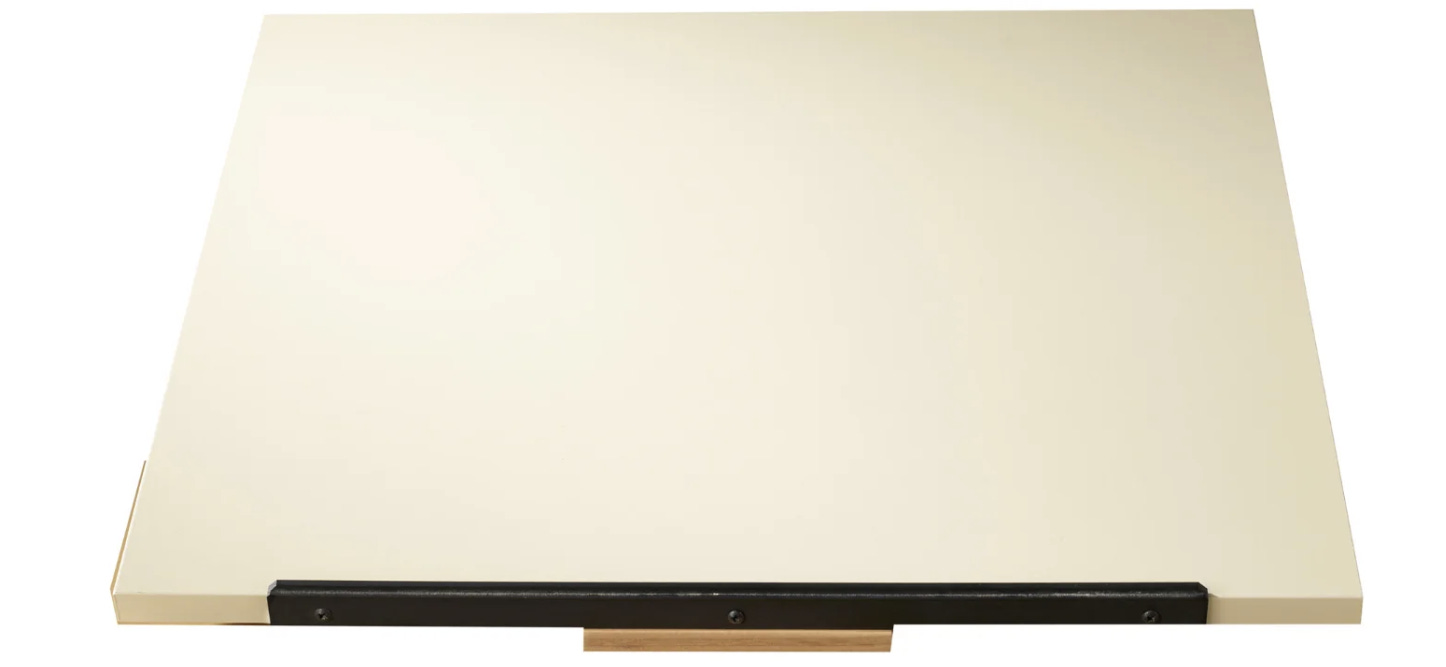
A workstation that fits how you work helps to avoid tension buildup. Pay attention to ergonomics and never write flat. Your eyes should be looking forward at the paper, not down so far that your neck is bent. Use a slanted board. Remember, the head is a heavy weight!
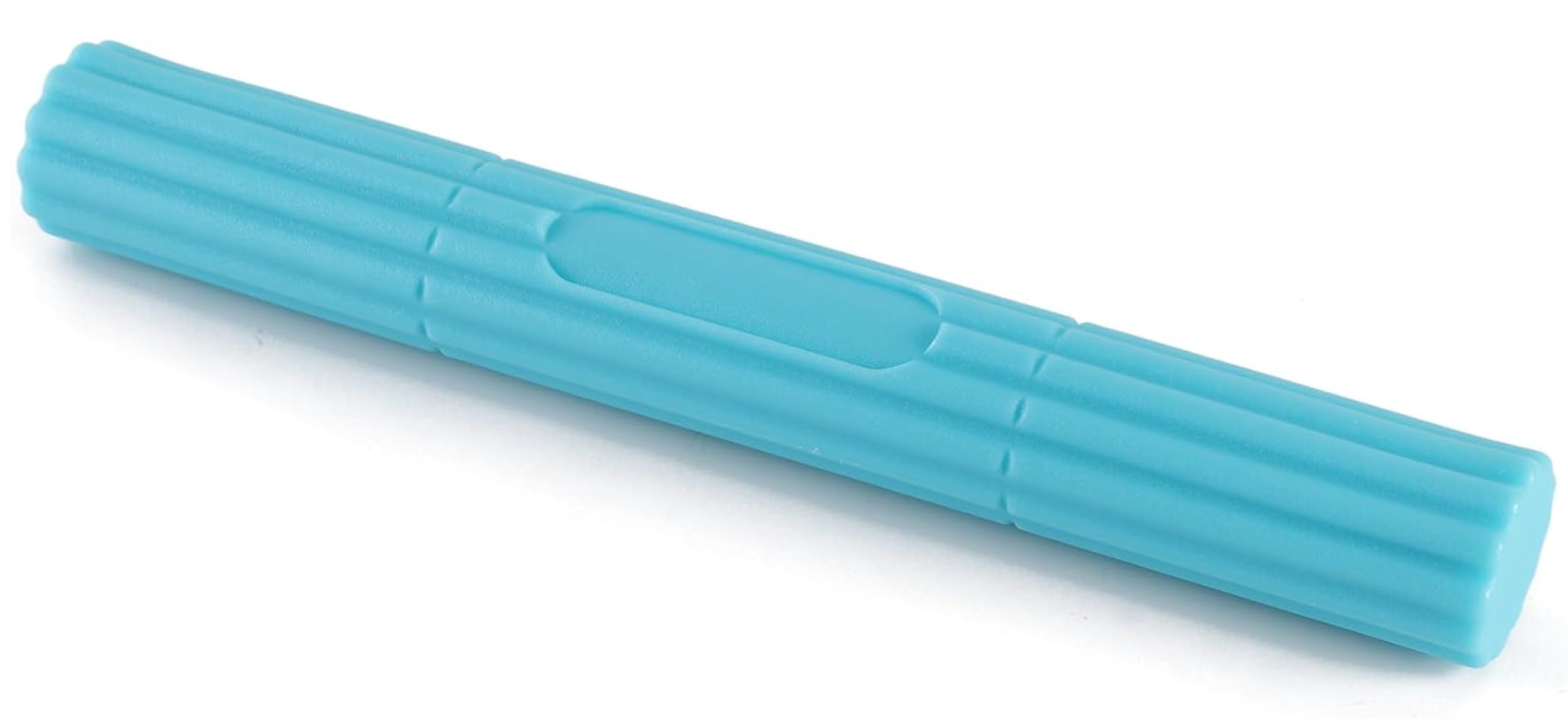
Stay flexible. Managing muscle tension from your work sessions is a must. The tiny increments of repeated writing add up. It could be a stiff neck, a twitch in your teres minor that appears out of nowhere, or a niggling pull somewhere under the trapezius. The wrist gets a lot of action, which can be addressed by having a wrist tool by your artboard. I use a wristwand to help stretch the ligaments, tendons and muscles of the hands and wrists. In fact, both hands work extensively, the left hand often holding the paper or an inked brush for re-inking the nib.
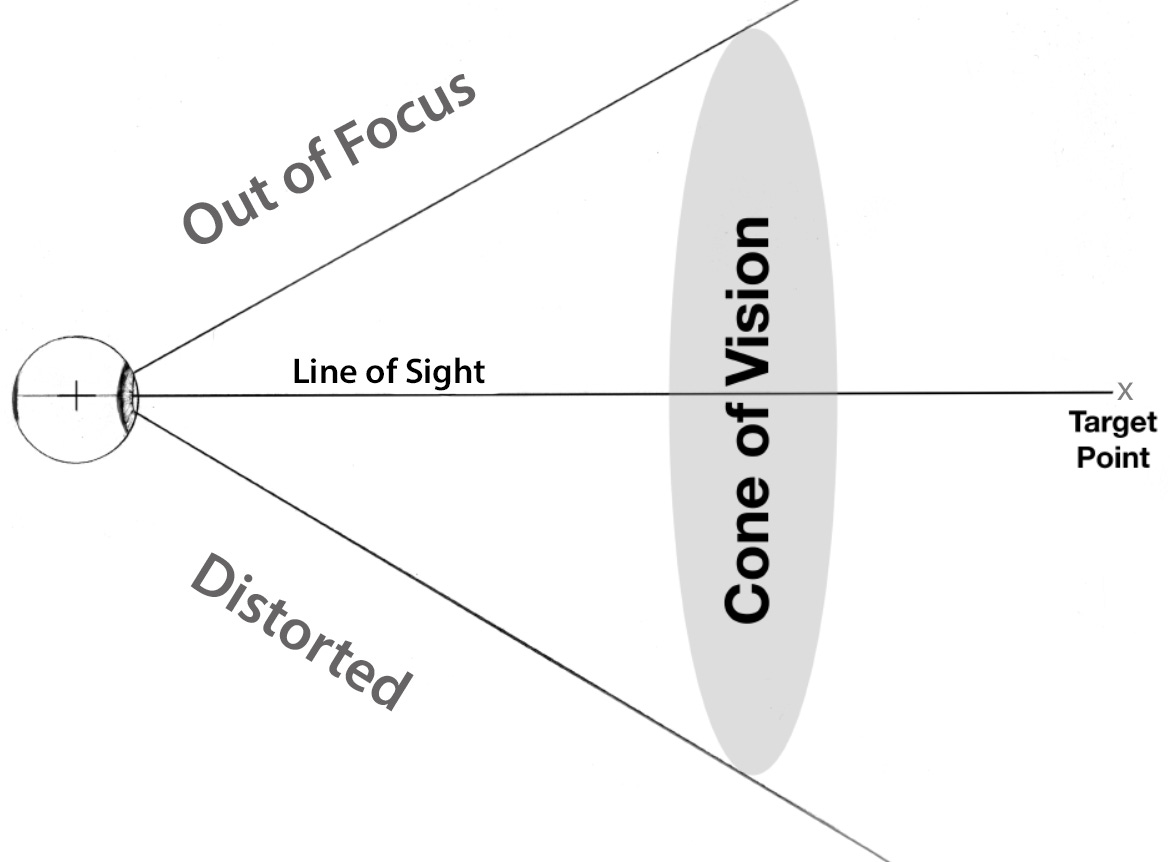
Posture is important. Hold yourself straight, with your chest up, back straight, and shoulders relaxed. Breath governs the stroke. If your chest is collapsed, your breath will not be complete and your marks will have less vitality. Be fully present and prepared for writing. The board should be slanted not only for better posture but for a more accurate view of the page, honoring the cone of vision: what is off to the side of your central focus will be distorted and cause unwanted distortions in your writing. Letterforms that begin to slant as your pen approaches the right side of the page is a clear indication of vision distortion. Move the paper to the left as you write, keeping your line of sight .
When beginning to study scripts, following the precise models can be stressful due to the need to achieve a certain form. Tension builds with repeated effort and needs to be dispelled. Fear of making an error is counter-productive, as we all know. The strokes are simply the path that you are on, just like footprints when walking. Everyone walks, but never in the same way. So we follow the basic rules of writing while still allowing ourselves fearlessly to have our own writing style. How much pressure, how light a grip, what kind of ink and how much, are all personal factors.
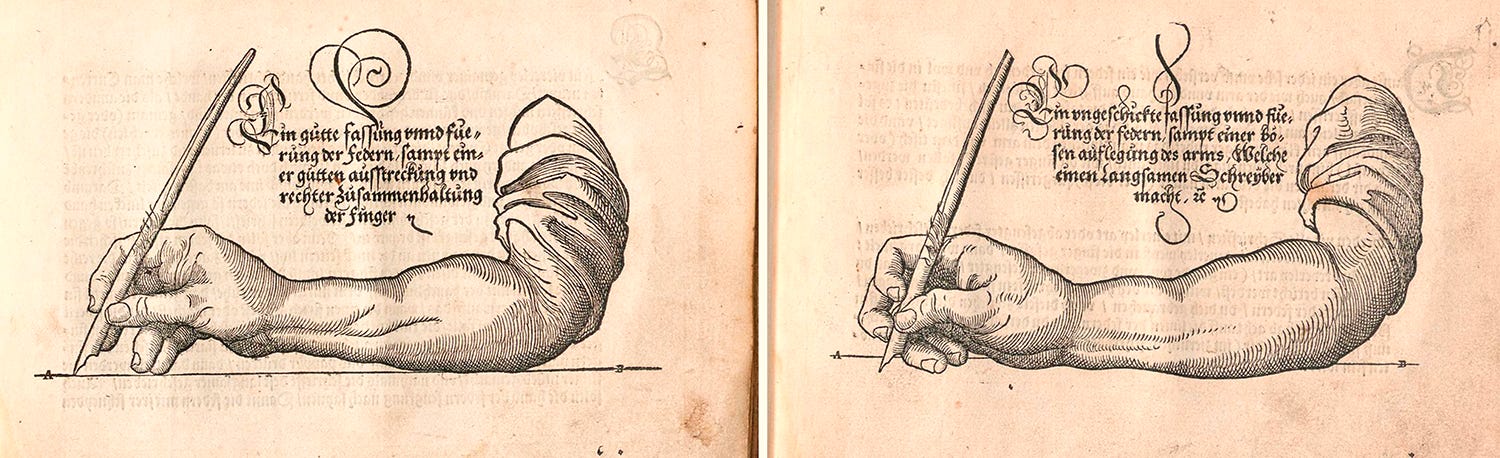
Wolfgang Fugger, in 1552, taught the proper pen hold. In Old German he described the images above. Left translation: “A good grip and movement of the quill, together with a fine extension and correct position of the fingers.” Right translation: “A clumsy hold of the quill, together with an evil putting of the arm on the table which makes a slow scribe.”
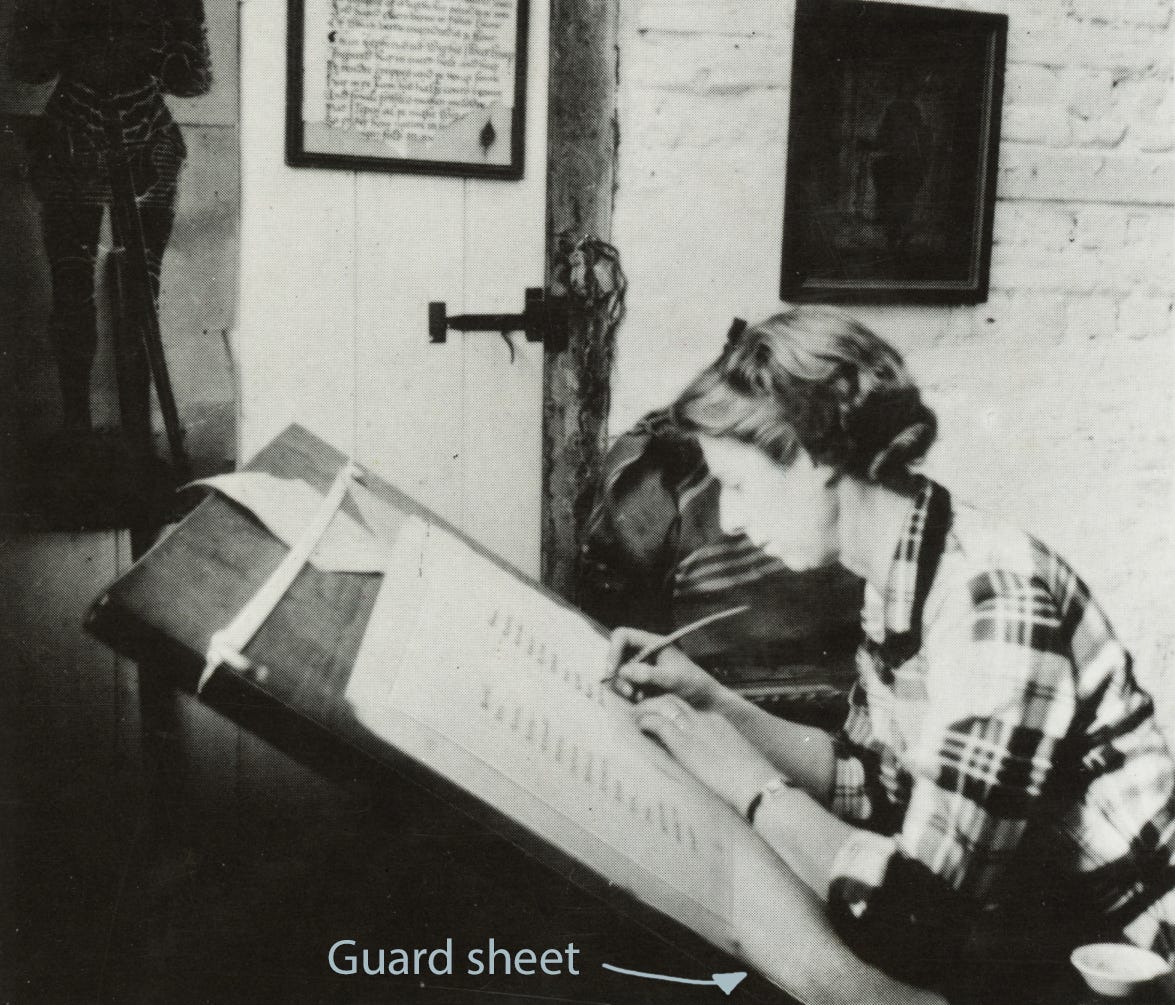
Preemptive steps reduce stress. If you are working closely, especially when focusing on a long text that will take hours of active time, or on smaller (3mm x-height) lettering, use a guard paper to protect the bottom of your page to keep it clean. Ink doesn’t write evenly over fingerprints; natural skin oils repel ink and will prevent its absorption into the paper. But there is an approved solvent known as “Bestine” that will remove grease from paper, even after it is inked. It will also remove grease spots from your best silks!
Irene Wellington (1904-1984), world famous UK calligrapher and student of Edward Johnston, specialized in the exacting detail of royal crests and heraldic commissions and contributed enormously to the practice of calligraphy. She used a guard sheet. A well illustrated 1987 book about her is available: More Than Fine Writing, the Life and Calligraphy of Irene Wellington.
Remember, the models we follow are only models. We do need to learn the basics, but if your y tail is a bit different, it’s alright if it looks good and has some energy. Spontaneity is very important; control is also important.
If you find yourself getting penmanship block and you are in the middle of a piece, try doing some flow, rhythm, and pattern exercises with the pen. These help a lot, and I venture to say all scribes do them for a minute or two every time they sit down to work. It gets you into the mood and provides time to clean or change the nib, adjust the ink flow, refocus, and renew your sense of natural movement.

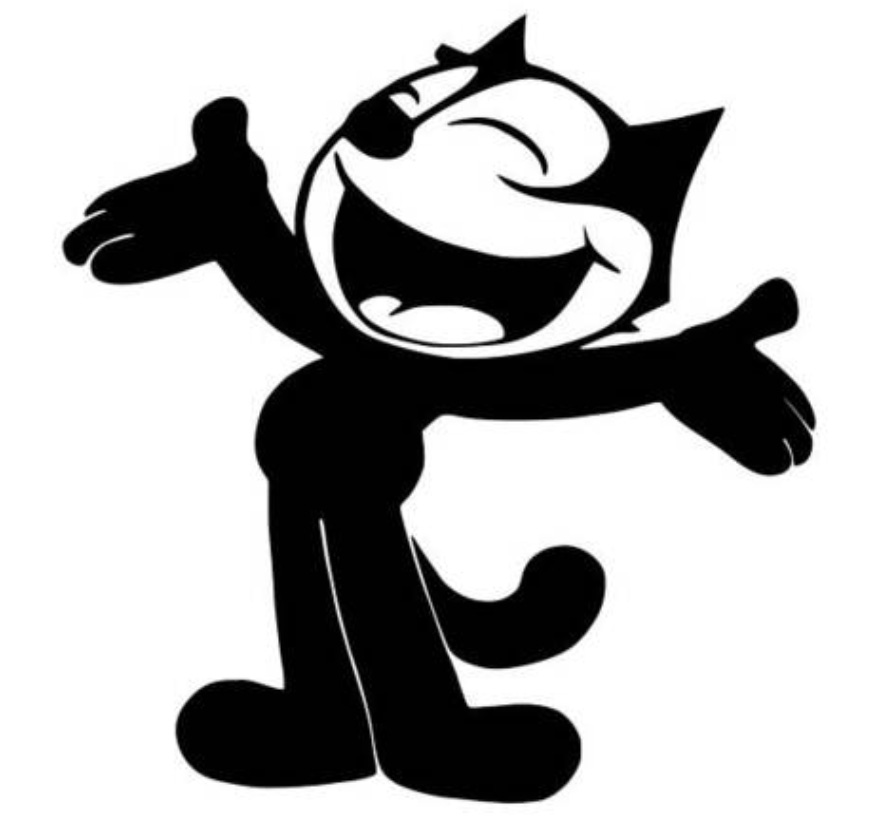
It is vital to get up, walk around, and stretch deeply so that built-up tensions leave the body; picture a cat’s movements and copy them. Then, when you come back to the paper, you might also see structural aspects that may have eluded you before. Without the tunnel vision of the moment, everything is fresh again.
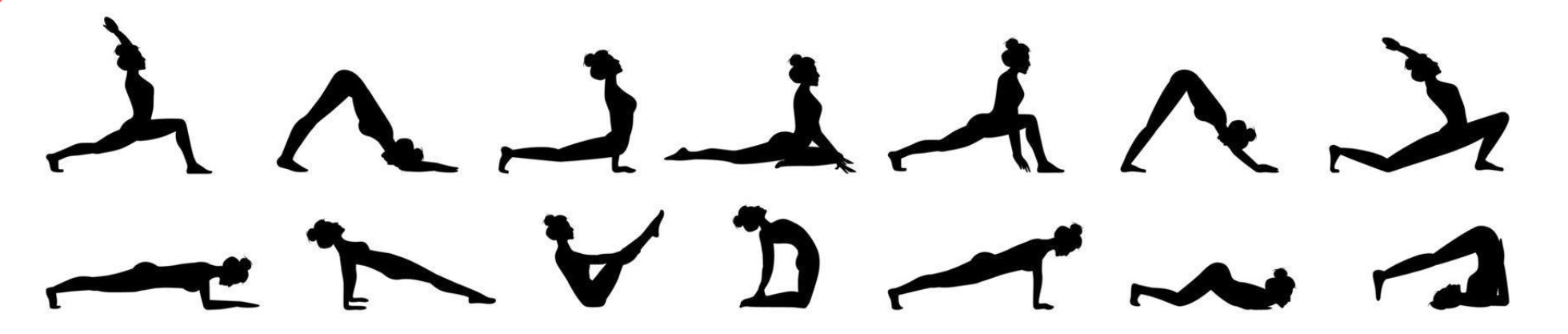
Another warmer-upper idea. If you have a yoga or exercise or weightlifting routine that you know by heart, try drawing the body positions with a pen or brush. Imagine a constellation of points, then push the tool. Or use the model of the Sun Salute, a series of 12 yoga poses to greet the day that is designed to integrate the body and spirit.
It is really fun to keep a sheet of excellent handmade paper—maybe a large sheet of Arches 140-lb. watercolor paper—by your board and add something to it each time you sit down to write. Do some warmups and patterns or test a new ink or watercolor—anything goes. Obviously, this becomes a record of fragments and becomes very textured over time. A sheet of paper can last for months at least and will be a useful memory trigger. A great deal is discovered by layering.
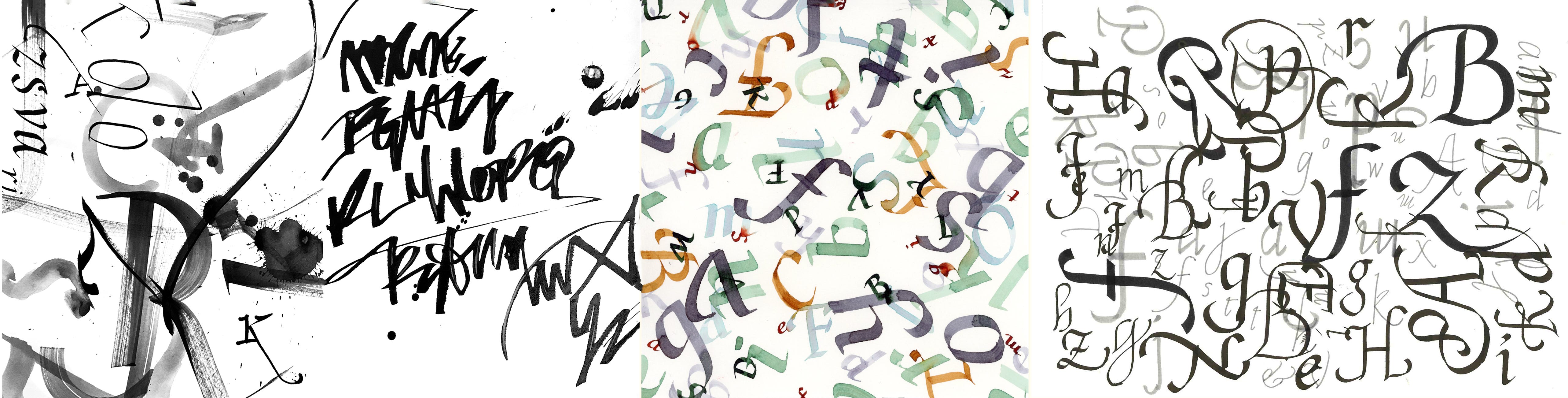
Never expect perfection. It’s only the doing, honestly, that will get you to the next level.
Thank you all for reading and enjoying my posts. It’s great to be here with you.
ONLINE SUMMER 2026!
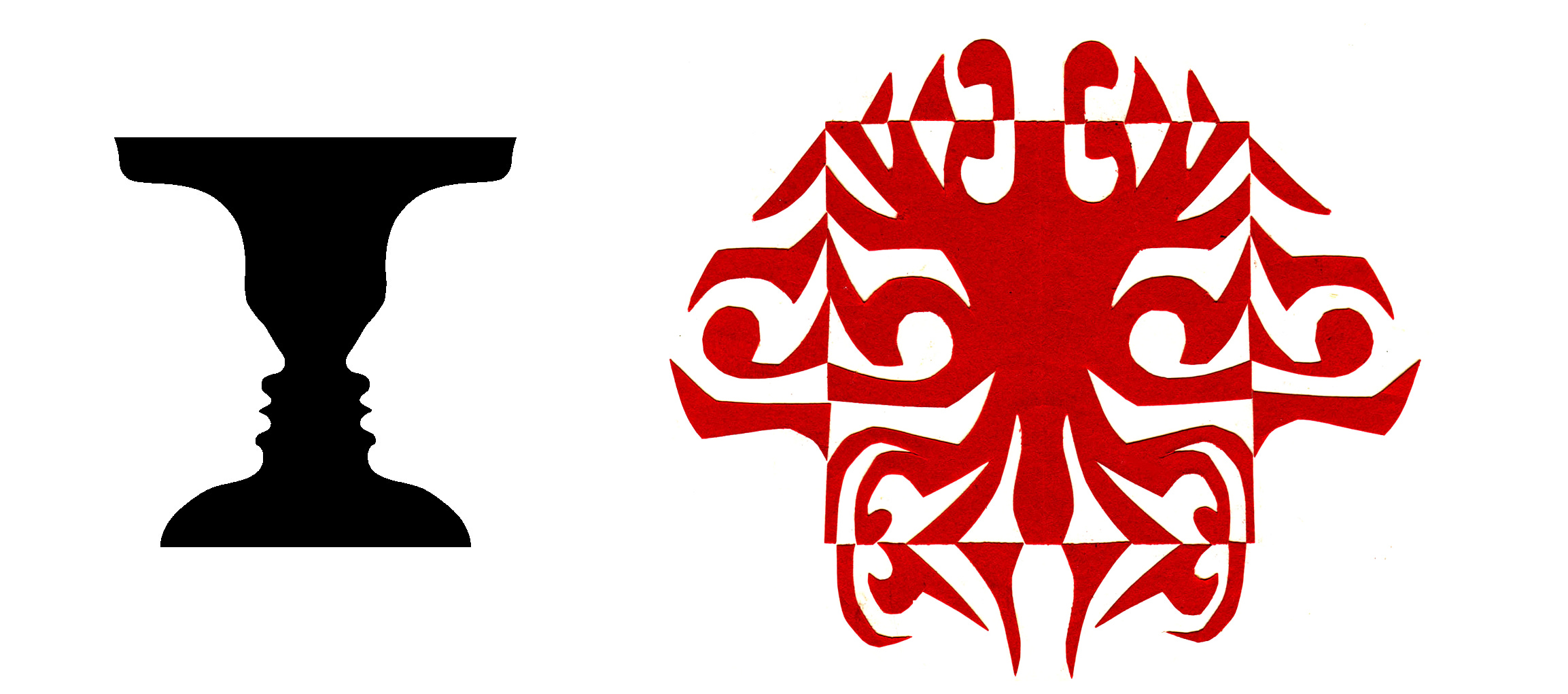
ART 232: The Design of Light and Dark: Text Art and Notan will cover optics, figure/ground theories and compositional methods in studio art, design, and letterform. I’m looking forward intensely to plunge into this area with you.
PRODUCTS
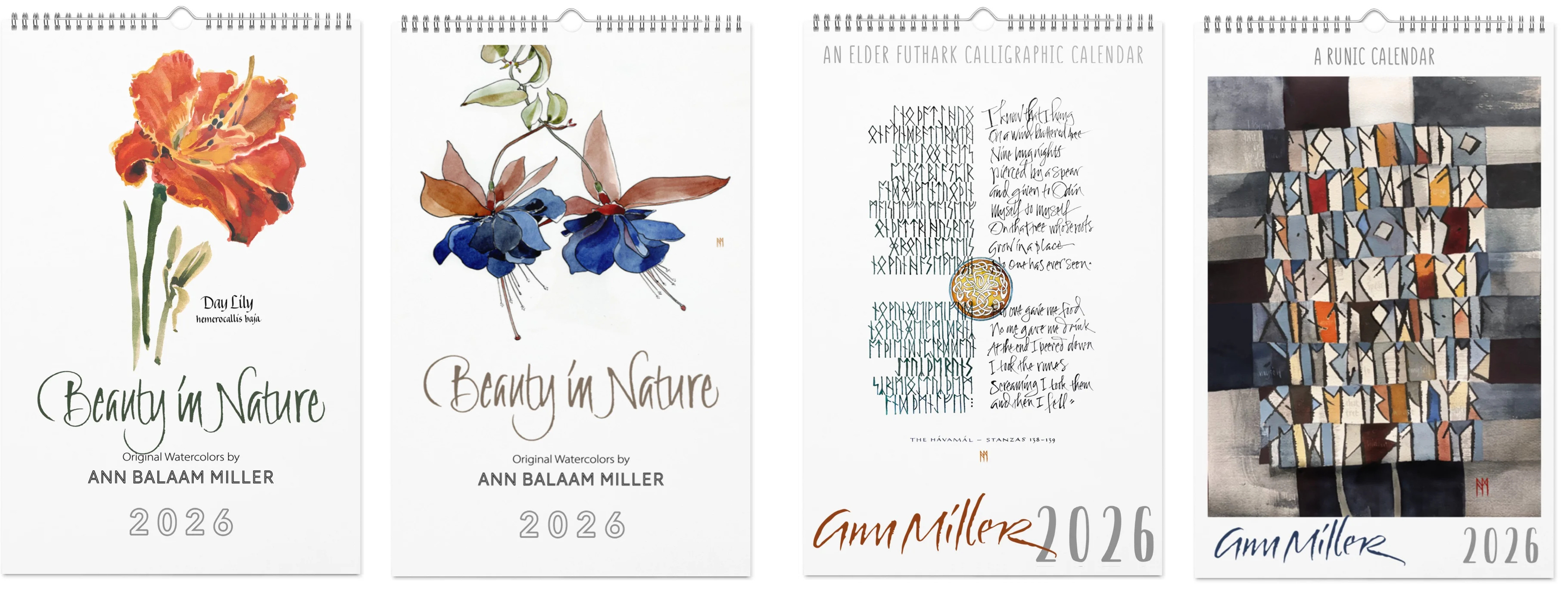
In my shop there are four art calendars for 2026 (it’s never too late!) and a few other items (mouse pads, mugs, pillows, scarves, jigsaw puzzles, and more). Email me for info or assistance with a custom order.
This blogpost on Substack will always be available free. The “paid” area is more interactive, with exercises and activities, discussion, and individual one-on-one conversation and critiques, like an online tutoring session. Your contribution is always appreciated, and helps keep my writing coming your way.
PAID SUBSCRIBERS: All paid subscriptions are now $75 annually or $7.50 monthly. I am eager to devote time to interactive projects and individual discussions on this basis. Invest in improving your graphic skills, design perception, and performance in the visual arts, handwriting, letterformation, and calligraphy.
EDUCATIONAL DISCOUNT: I offer a 50% discount on the annual paid subscription for art instructors and those in the art education field.
A paid subscription gives you access to ongoing conversations on my chat feed, permanent access to all archives, and access to exercises and how-tos. Let’s continue to talk about art and keep it fed, nourished, and productive.