

A Calligrapher's Bibliography
Preparing for your ongoing study of handlettering

Collecting books can be an obsession, but in the area of letterform and book arts there are some basic instructional books I recommend as unequivocally necessary, and several which were for me true eye-openers.
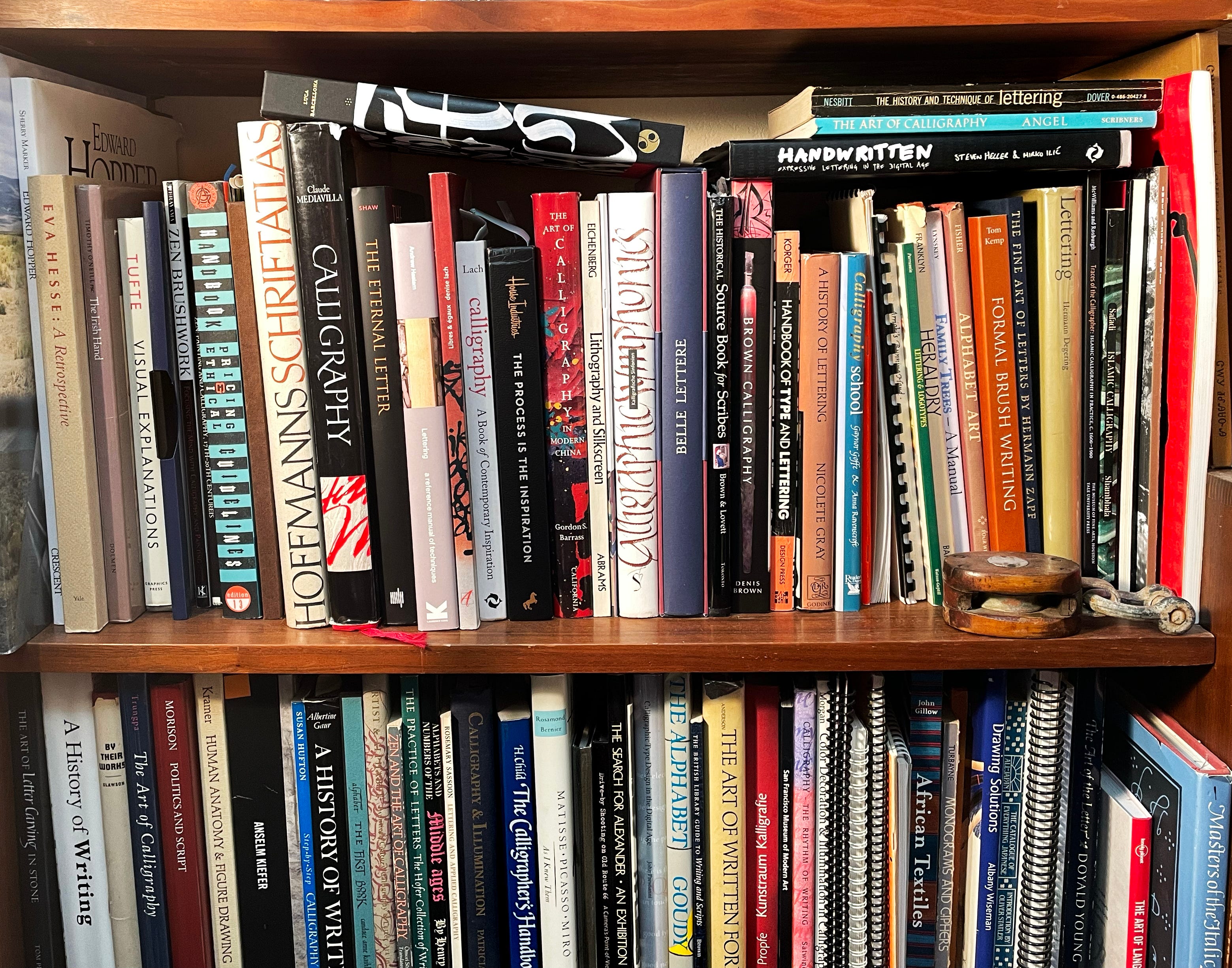
Beginning your writing journey.
Already we have our toe in the water. Everyone picks up the pencil. Some students are lucky enough to have had an early introduction to making letters following the commonsense structure of the Italic-based model rather than the historic Palmer cursive. An increasing number of grade school teachers have gathered the knowledge, skill, and enthusiasm to teach the Getty-Dubay method to their students. This simpler method reaches younger students and makes a huge difference in building awareness of creating form. It is also preferred for the disabled or dyslexic.
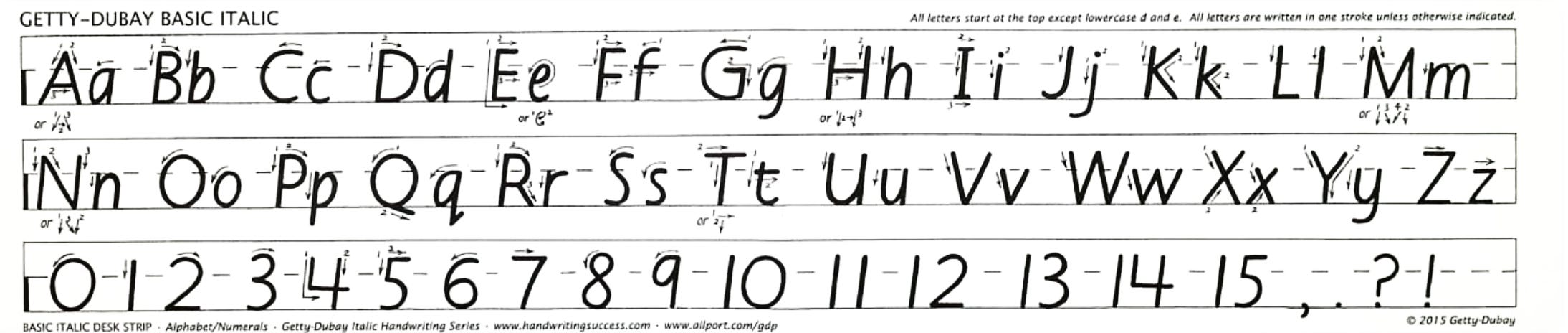
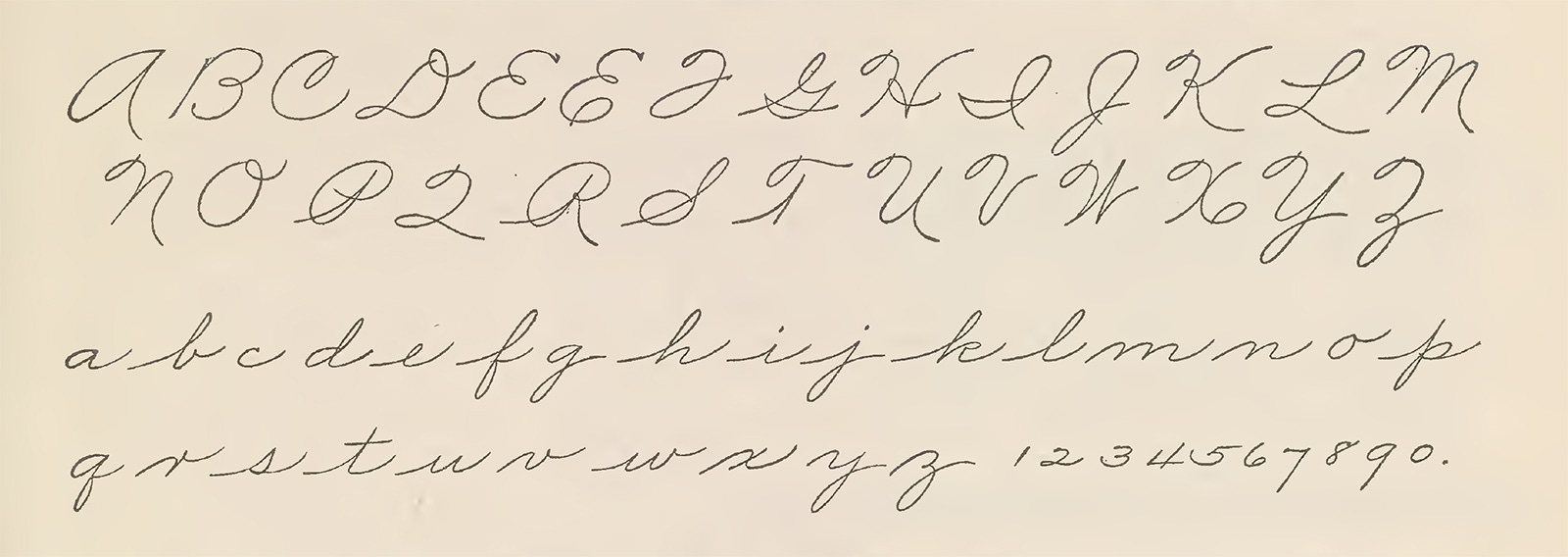
Compare the Getty-Dubay model above to the 130 year old Palmer method, a system of movement that is based not on geometry, but on flowing motion popular in the late 19th c. Growing up in the 20th century schoolchildren in the United States were taught to follow this model.
After learning to write, there is no public system in place for further development or refinement of handwriting skills, so we turn to practicing from books, taking online classes, and attending in-person workshops and international calligraphy conventions. Possibilities for development of something as individual and personal as how we write and why we write should be at hand. It is a process of self-realization and expression.
Reliable instruction for first studies.
Helpful for beginners are the following two books, with simple and clear explanations of the method for constructing letters. Essential reference material!
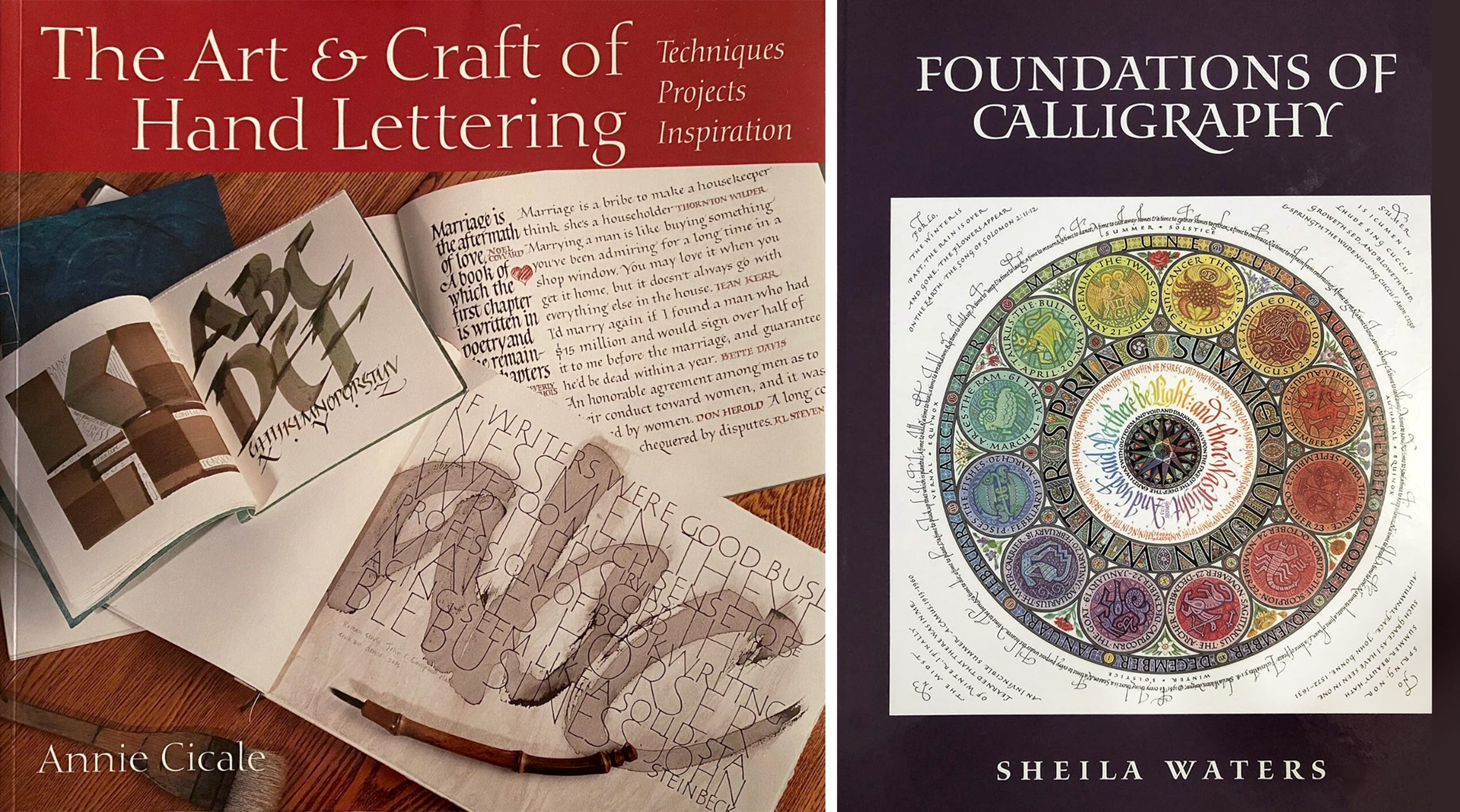
1 - The Art & Craft of Hand Lettering: Techniques, Projects, Inspiration - Annie Cicale (2004)
This book is easy to follow, with straightforward models of the basic historical styles and creative ideas for using calligraphy in crafts and book arts.
2 - Foundations of Calligraphy - Sheila Waters
John Neal Bookseller (2006)
Detailed explanations of proper setup of workstation, tools, models, and tips; historical references; and highly accurate construction methods of all major Western hands.
Further development.
Keeping the flow of practice involves a little more inspiration, new challenges that address design, a variety of tools and styles, and clear models for exercising some flexibility within a certain design consistency. These books are wonderful.
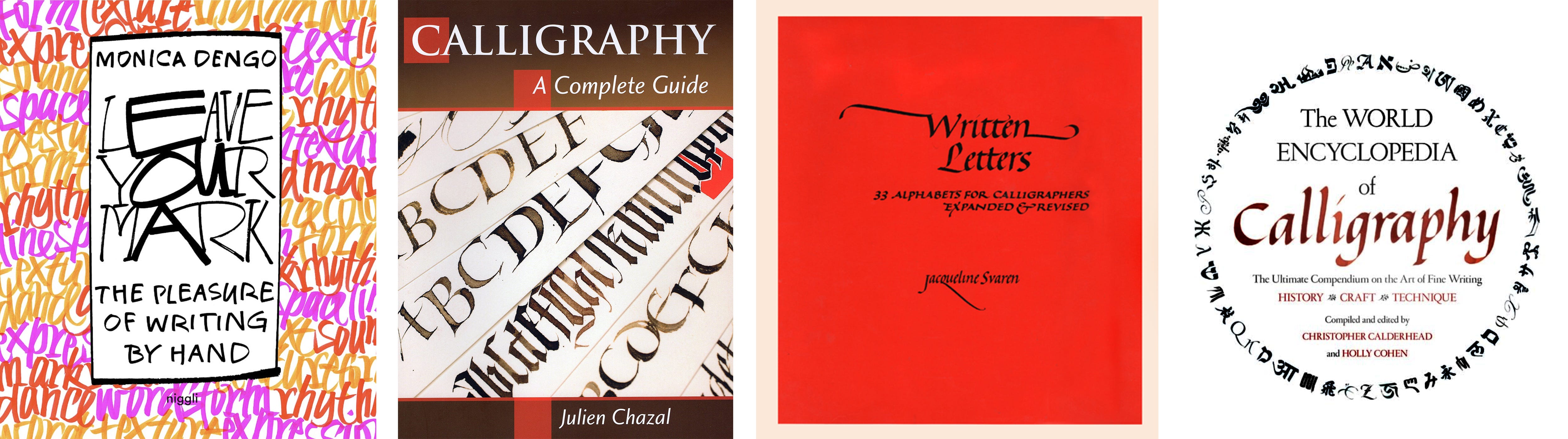
3 - Leave Your Mark: The Pleasure of Writing by Hand - Monica Dengo (2019)
Letter practice, rhythm, and flow with suggestions for page design using stylistic variations. Down to earth energy and excellent tips on practical freehand writing.
4 - Calligraphy: A Complete Guide - Julien Chazal (2013)
A guide to Western calligraphy from beginning to advanced, richly illustrated with diverse alphabets and Julien’s unique European touch and detailed pen handling tips. Fine brush and cola pen alphabets are included along with a host of subtle variations and refinements and historical background material. A sense of classic European refinement throughout.
5 - Written Letters - Jacqueline Svaren (2011)
World scripts, their origins, traditions, and unique characteristics with a step-by-step guide for letterform construction. Using x-height, ductus, axis, and all the factors of letter formation you can learn to write Carolingian, Arabic, Hebrew, Tibetan, Japanese and many more scripts.
6 - The World Encyclopedia of Calligraphy - Christopher Calderhead (2011)
World scripts, their origins, traditions, and unique characteristics with a step-by-step guide for letterform construction. Using x-height, ductus, axis, and all the factors of letter formation you can learn to write Carolingian, Arabic, Hebrew, Tibetan, Japanese and many more scripts.
Holy smokes!
Surprise, enlightenment and zing are ever so welcome when you’ve done your homework for some years! Finally you can write out a page in your favorite scripts, understand how to use your tools, media, and materials, and feel comfortable with your own approach to writing. You can achieve a convincing script from the model, play with inventing letters, use serifs and a flourish or two with satisfaction, and have a strong urge to know more, to reach somehow a higher level of expression. You want to astonish yourself! The wonders that launch you into the universe of text art are the books that fill that unique, niggling gap in your understanding of the philosophy of text art, information that spurs you on with new resolve to do something new, something more juicy, with the letters you know. For me, the next few publications delivered some early breakthrough moments and helpful, reliable information.
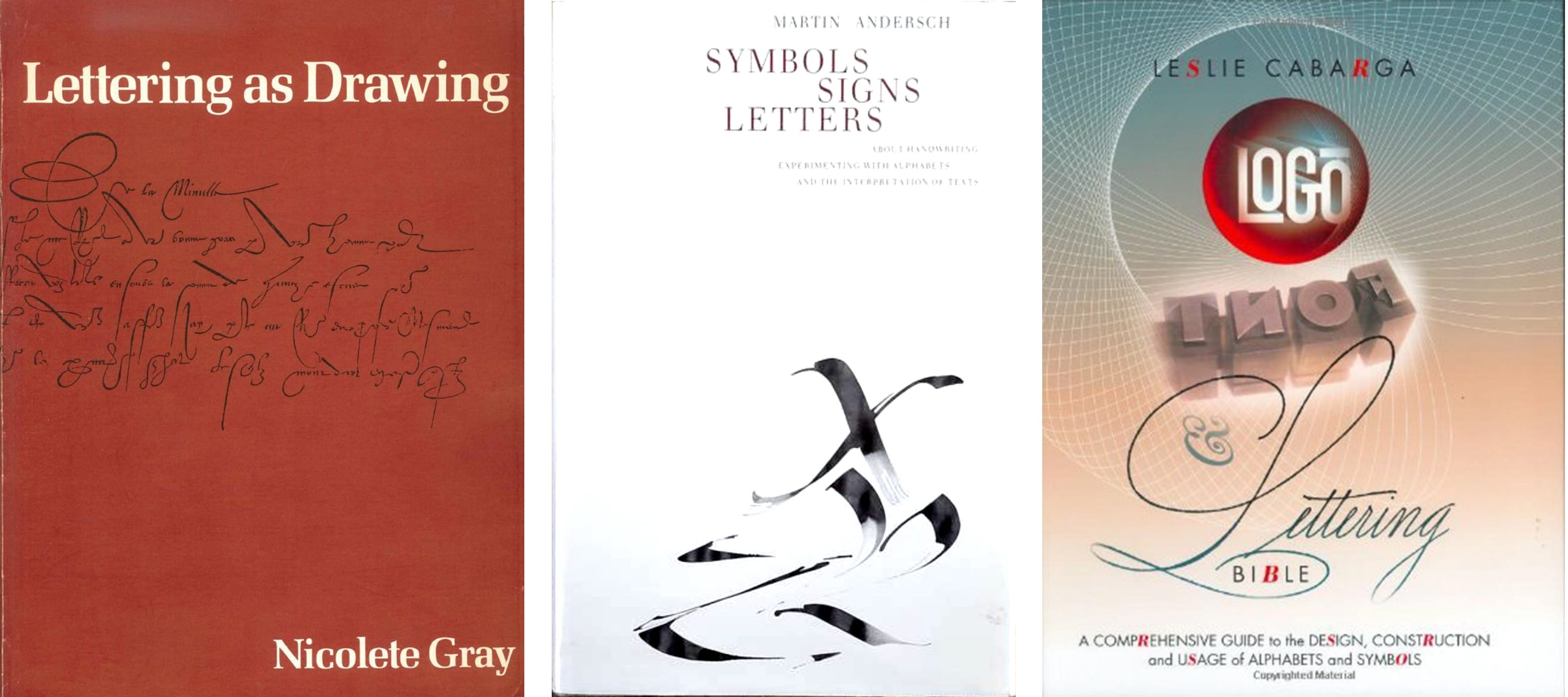
7 - Lettering As Drawing - Nicolete Gray (1971, 1982)
A philosophical book that illustrates the conceptual history of the use of letterform in every conceivable medium. It will broaden understanding and provide a very helpful reference to guide your work.
8 - Symbols, Signs, Letters - Martin Andersch (1989)
The first book I bought on experimental freeform lettering and handwriting. It enabled me to leave the early “how-to” manuals for less constrained fields.
9 - Logo, Font & Lettering: A Comprehensive guide to the Design, Construction and Usage of Alphabets and Symbols - Leslie Cabarga (2004)
If you want to develop your digital graphic expertise and enter the logo market, this book is a no-nonsense approach to creating vector files and can be used to make a font from your handwriting. Obviously it is dated, but Cabarga’s understanding of letterform and sign painters’ styles is highly informative and can help you understand how to dress your letters with traditional line work, perspective, shape, and color.
Favorite of all.
Pivot points always hit square on. After all is said and done, you need only one thing: how to pull the millions of truths about letters and symbols into one bag. This book by André Gürtler pulled it all together for me and I am forever grateful to him for documenting his decades of teaching at the University of Design and Art in Basel, giving classes in calligraphy, type design, and the history of letterforms for more than 35 years.
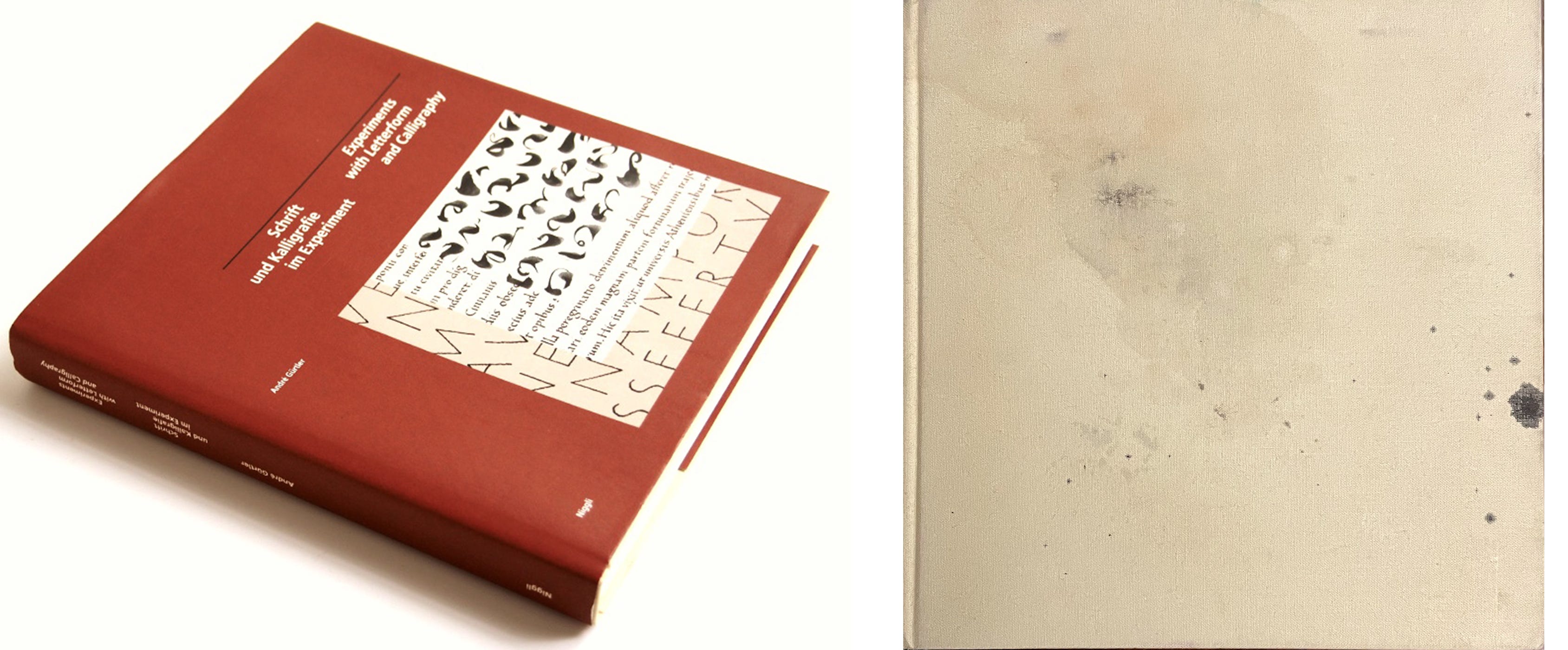
10 - Experiments with Letterform and Calligraphy - André Gürtler(1997)
This book contains the results of student examples from the famed classes of Gürtler at the University of Basel in Switzerland. It is grouped into every design treatment humanly possible to use in creating letterform to delineate the space of the page. It hones your perception to a fine degree. It demands the most of the student in terms of focus and design. It is a most valuable book for anyone who uses letterform in their visual art.
After some years of accumulating bits and pieces, those bits find their way onto the same page. Ruled guidelines become striations, a bit of Mondrian or Calder seeps in with the red-yellow-blue, some gold powder and gold leaf fall into place with varying brightness, some acrylic gouache forms areas that both protect and resist, scoring tools make their marks, and brushes and pens contribute their marks too. Edges are lost and found, and contrasts of dark/light, matte/gloss, and warm/cool help the framing and spatial depth.
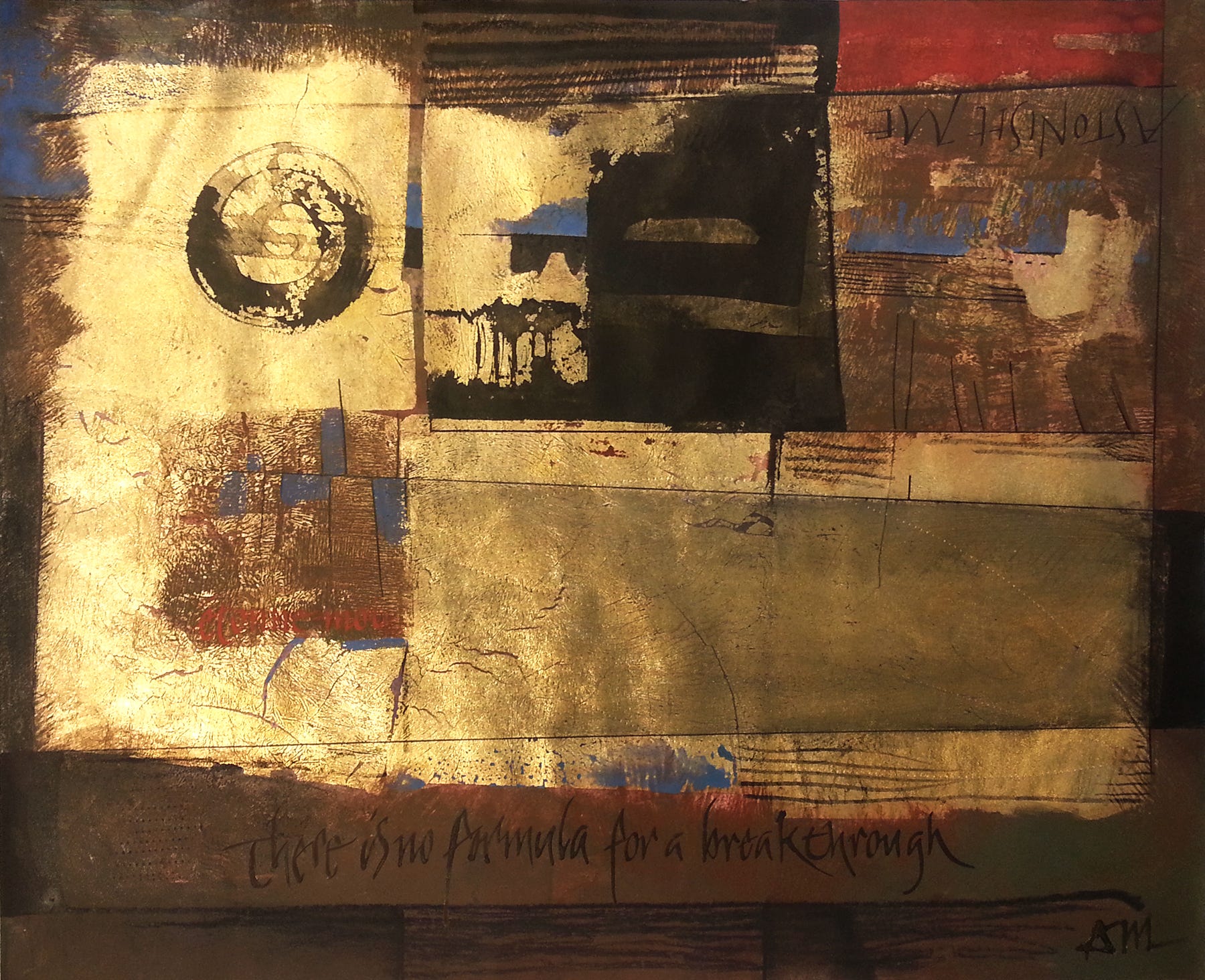
What comes in, eventually reappears. We digest ideas one at a time with the result of an emerging, hopefully coherent, visual form.
We make letterforms for our pleasure, enlightenment, to share our thoughts and ways, and all the while we are building a legacy of sorts. It’s complicated, but if you don’t realize your visions with some tangible mark-making, you’ll miss a good chunk of life’s enjoyment.
Thank you all for reading and enjoying my posts. It’s great to be here with you.
ONLINE SUMMER 2026!
ART 232: The Design of Light and Dark: Text Art and Notan will be on Thursdays from 6-7:50pm. Starting in mid-July, this 6-week class will cover optics, figure/ground theories and compositional methods in studio art, design, and letterform. I’m looking forward intensely working with you in a new, highly interactive format.
PRODUCTS
In my shop there are many gift items (mouse pads, mugs, pillows, scarves, jigsaw puzzles, and more). Order online or email me for custom pieces.
This blogpost on Substack will always be available free. The “paid” area is more interactive, with exercises and activities, discussion, and individual one-on-one conversation and critiques. Your contribution helps keep my writing coming your way.
PAID SUBSCRIBERS: All paid subscriptions are now $75 annually or $7.50 monthly. I am eager to devote time to interactive projects and individual discussions on this basis. Invest in improving your graphic skills, design perception, and performance in the visual arts, handwriting, letterformation, and calligraphy.
EDUCATIONAL DISCOUNT: I offer a 50% discount on the annual paid subscription for art instructors and those in the art education field.
A paid subscription gives you access to ongoing conversations on my chat feed, permanent access to all archives, and access to exercises and how-tos. Let’s continue to talk about art and keep it fed, nourished, and productive.
I have many of those books, Ann, and they are a treasure! Thanks for the reminder...
We in Portland love a good Getty-Dubay shout-out! :) And as someone with a rather large, er, *healthy* calligraphy library, I love that you have my favorites in your bibliography here. Thanks for sharing this, Ann.